


Latest news

Service Credit Union, a $6 billion-asset institution based in Portsmouth, New Hampshire, has introduced a fraud alert checklist to help employees identify signs of scams targeting members. The checklist, posted in branches and given to staff, lists red flags such as customers being told they've won a prize, must pay a fee, or should keep a transaction secret. Stephanie McNamara, assistant vice president and loss mitigation operations lead, said the tool has boosted staff confidence, particularly among young employees. The credit union, with about 50 branches across New England and Germany, faces online account takeovers and check fraud as major threats. The initiative aligns with broader industry efforts as scams grow more sophisticated and losses mount, with the Consumer Federation of America estimating $119 billion in annual U.S. losses to online scams and Interpol reporting AI-enhanced fraud is 4.5 times more profitable than traditional methods.

Landmark Credit Union, based in Milwaukee, has agreed to acquire American National Bank-Fox Cities, based in Appleton, Wisconsin. The deal, announced Tuesday, will add $419 million in assets and two branches to Landmark's $7 billion-asset, 35-location network. The transaction is expected to close in the second half of 2026. It marks the fifth credit union-bank deal this year and the third whole-bank acquisition. The announcement comes a day after the Independent Community Bankers of America launched a national campaign opposing such deals, citing tax exemptions for credit unions. Credit union trade groups criticized the campaign as misinformation.
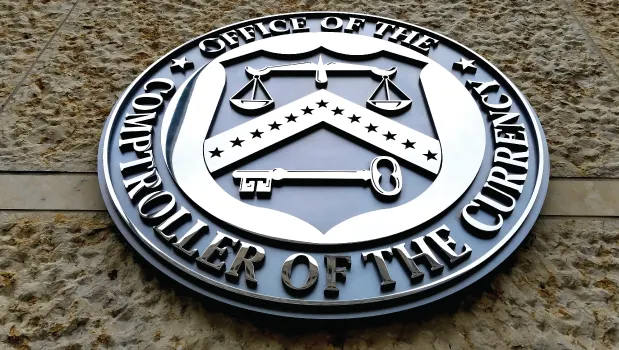
Bank charter applications to the OCC surged to 18 in 2025, matching the total of the previous four years. Comptroller Jonathan Gould calls it a return to the norm and has restructured the chartering organization to report directly to him, led by Stephen Lybarger. Despite a headcount reduction of 216, Gould leverages examiner rotations to staff the chartering arm. The agency faces opposition from banking trade groups over national trust charters for crypto firms and from state supervisors over proposed regulatory language changes. Gould has also begun accompanying examiners on community bank examinations to inform supervisory reforms.

The Washington Department of Revenue announced that state-chartered credit unions merging with or acquiring state-chartered banks are now subject to a 1.2% business and occupation tax on gross income from such deals, effective for transactions submitted for regulatory approval after Jan. 1, 2026. Out-of-state credit unions and deals submitted before that date are exempt. Washington was a hotbed of credit union-bank deals in 2024, and this is the first state law of its kind. Bank trade groups support the measure, arguing it mitigates revenue loss from tax-exempt credit unions acquiring tax-paying banks, while attorneys warn it may push credit unions to convert to federal charters or mutual banks and deter local bank mergers.

FiCare Federal Credit Union has sued Fiserv, alleging inadequate cybersecurity in its Virtual Branch Next online banking platform allowed hackers to steal hundreds of thousands of dollars from customer accounts. The complaint claims Fiserv failed to implement basic security controls like biometrics and multifactor authentication, and later charged for a security upgrade. Fiserv denies the allegations and vows to defend itself. The lawsuit adds to Fiserv's legal challenges, including similar claims from another credit union and shareholder suits over its Clover point-of-sale service.
2026 may become an 'enhanced sequel' to 2025 for the banking industry: M&A deals are expected to double, applications for new banks continue to rise, and the regulatory wind shifts from easing to reshaping. Based on S&P Global data and predictions from the two co-founders of Klaros Group, this article outlines the key industry themes worth watching in the coming year.
In 2025, the Office of the Comptroller of the Currency received as many charter applications as in the previous four years combined, fueled by a more welcoming stance from regulators and pent-up demand from fintechs. Most applications were for national trust charters, with some seeking industrial loan company charters. Six de novo applicants received conditional charters. Regulators and industry experts expect the trend to continue into 2026, with more applications and new bank operations commencing. While the influx poses a competitive threat to established banks, the new entrants are still a small part of the market. Trade groups and lawmakers have raised concerns about trust and ILC charters, but the OCC maintains that the surge signals healthy competition and innovation.

Bank M&A in 2026 is expected to accelerate, with deal announcements potentially doubling 2025's 181 transactions as regulatory approvals speed up and the environment becomes more constructive. Analysts predict a barbell-shaped banking landscape: midtier and regional banks growing through acquisitions, while smaller banks (especially under $1 billion in assets) face pressure from succession issues, technology costs, and a shrinking buyer pool. Larger banks, fintechs, and credit unions are likely buyers, and consolidation may be influenced by activist investors and political timing. States with many banks, such as Texas and Illinois, will see continued consolidation, and the overall trend points to a more competitive industry with fewer but larger institutions.
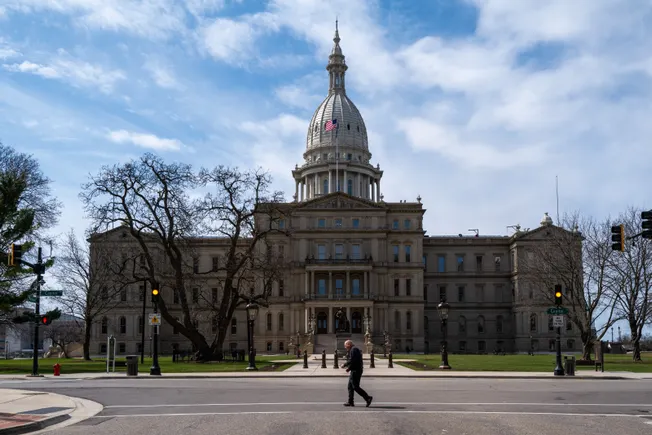
Livonia, Michigan-based Zeal Credit Union has agreed to acquire The Miners State Bank, boosting its presence in Michigan's Upper Peninsula. The transaction, expected to close in the fourth quarter, will create an institution with 22 branches and approximately $1.1 billion in assets. Financial terms were not disclosed. The deal is the first announced acquisition of a bank by a credit union in 2026. The Independent Community Bankers of America criticized the deal, calling for policymakers to address the impact of tax-exempt credit unions acquiring taxpaying community banks and to eliminate the federal tax exemption for credit unions over $1 billion in assets. Credit union-bank acquisitions spiked to a record 22 in 2024 but fell to 16 last year, according to Tyfone. Zeal previously announced its acquisition of Gogebic Range Bank on Dec. 30, 2024, which was approved by regulators late last month. The Miners State Bank acquisition will add five branches and about $144 million in assets. Zeal CEO Julie Kreinbring and Miners CEO Paul Hinkson expressed enthusiasm for the partnership. Michael Bell, a partner at Honigman, expects 2026 to be very active for such deals and disputed the ICBA's position.
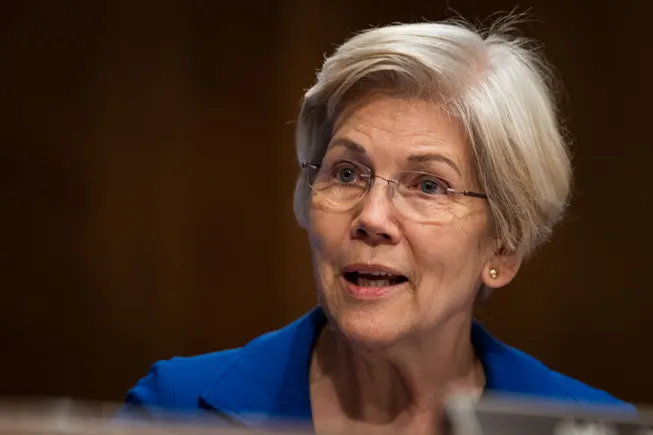
Three Senate Democrats—Elizabeth Warren, Cory Booker, and Richard Blumenthal—sent a letter Monday to the CEOs of 21 credit unions across 12 states, questioning their overdraft and non-sufficient funds (NSF) fees, which they call 'predatory.' The letter cites CFPB data showing that consumers with incomes between $35,001 and $65,000 are nearly twice as likely to be charged overdraft and NSF fees as those earning $100,001 to $175,000, and that less than 10% of customers account for almost 80% of overdraft fees. It follows the National Credit Union Administration's March decision to stop publishing overdraft and NSF data for individual credit unions and Republican lawmakers' repeal of the CFPB's rule that would have capped overdraft fees at $5. The senators point to Alliant Credit Union, which eliminated overdraft fees in 2021 and still had a record dividend payout in 2023, as proof that such fees are not necessary. They request answers from the credit unions by Dec. 14.