


Library
Bank of America Fined $1.21B for AML and Sanctions Violations
The Treasury Department announced that Bank of America will pay more than $1.21 billion in penalties for violating anti-money laundering and sanctions laws. The penalties include a $1.2 billion fine from FinCEN—the third-largest in Treasury history—and a $750 million civil penalty from the OCC, the largest in its 163-year history. The OCC cited a deficient and ineffective compliance program, while OFAC announced an $11.6 million settlement over sanctions violations tied to Iran, Russia, global terrorism, and narcotics. Bank of America admitted to willful violations of the Bank Secrecy Act, failed to file suspicious activity reports for $5 billion in transactions, and did not properly monitor trillions of dollars in transactions. The bank agreed to a cease-and-desist order in 2024 but failed to complete necessary steps, leading to the penalties. CEO Brian Moynihan said the bank is committed to resolving the issues, and a spokesperson noted investments in technology and personnel. The penalty reduced third-quarter earnings by about 17 cents per share and caused a 7.7% drop in stock price.

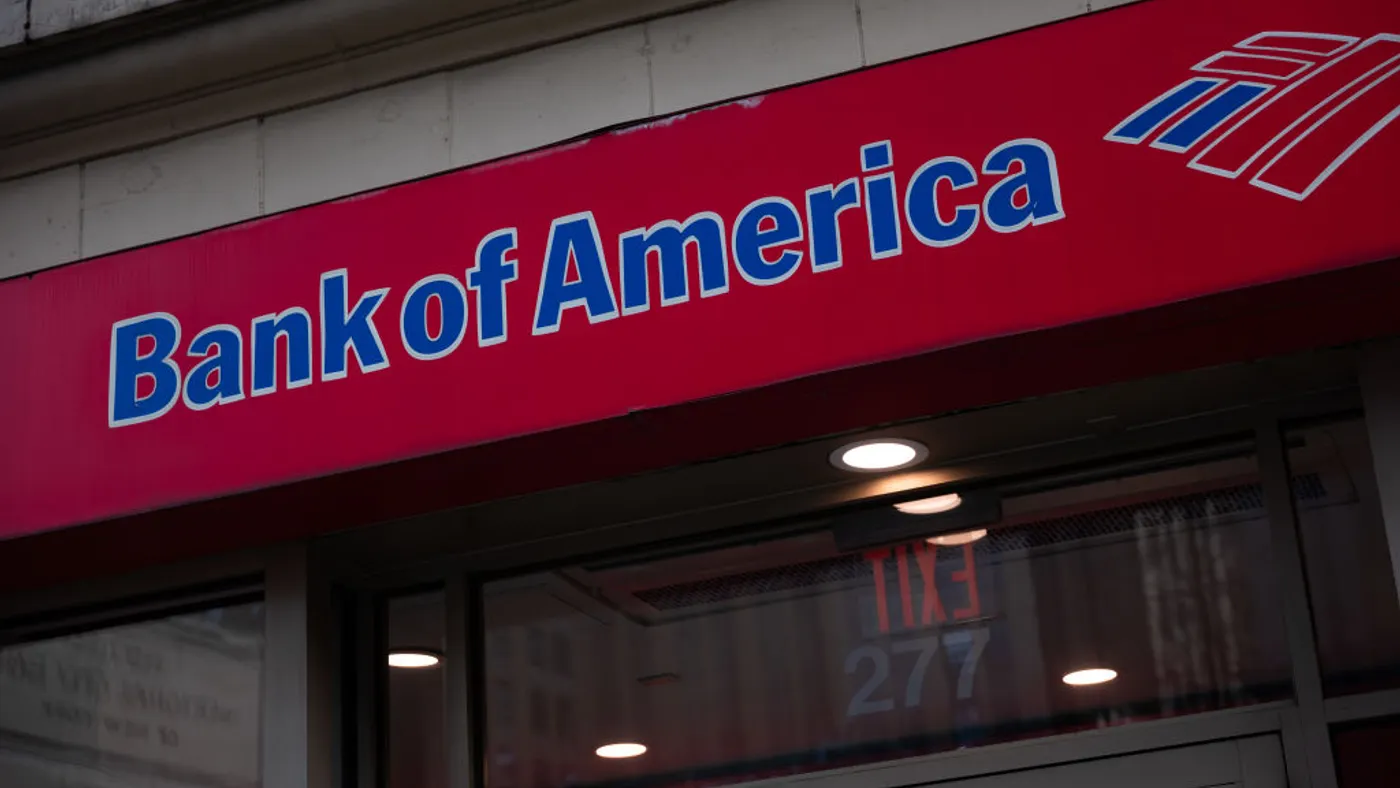
Bank of America fined $1.21B over AML flaws
The nation's second-largest lender failed to properly monitor trillions of dollars in transactions, the Office of the Comptroller of the Currency said.
By: Gabrielle Saulsbery and Caitlin Mullen • Published Oct. 13, 2026 • Updated Oct. 14, 2026
Bank of America must pay more than $1.21 billion in penalties for violating anti-money laundering and sanctions laws, the Treasury Department announced in October.
Within that amount, a $1.2 billion fine levied by the Financial Crimes Enforcement Network is the third-largest in Treasury history. The Office of the Comptroller of the Currency concurrently assessed a $750 million civil monetary penalty – the largest in its 163-year history – over a “deficient and ineffective” compliance program.
The Office of Foreign Assets Control also announced an $11.6 million settlement with Bank of America over sanctions violations tied to Iran, Russia, global terrorism and narcotics.
The Treasury credited the OCC’s penalty toward its $1.2 billion fine. No asset cap was imposed.
Charlotte, North Carolina-based Bank of America admitted to willful violations of the Bank Secrecy Act, FinCEN said. The bank said it failed to implement and maintain an AML program that satisfied the BSA and FinCEN’s implementing regulations, and that it failed to conduct due diligence for correspondent accounts for foreign financial institutions.
The bank also failed to file suspicious activity reports for $5 billion in transactions, FinCEN found.
Bank of America failed to properly monitor trillions of dollars in transactions, and “knew for years that it was failing to escalate potentially suspicious activities to investigators for review,” the OCC said.
Additionally, the bank’s BSA officer and staff “lacked sufficient skills and expertise” to effectively manage the bank’s BSA/AML program, according to the regulator.
“Financial institutions are on the front lines of protecting our economic and national security,” Treasury Secretary Scott Bessent said in a prepared statement. “When a bank of this size fails to meet its anti-money laundering and sanctions obligations, the consequences extend far beyond its own walls, exposing the entire U.S. financial system to significant illicit finance risks.”
Bank of America agreed to a cease-and-desist order in 2024 related to BSA/AML deficiencies. But the lender failed to complete steps needed to establish an effective BSA/AML compliance program after the order, and its program continues to have significant issues, the OCC said.
More than a year after the initial order, Bank of America didn’t escalate potentially suspicious activity for review, and it processed potential trade-based money laundering transactions because of a flaw in its transaction monitoring program, the OCC said.
“Almost two years ago, the bank signed an order with the OCC and committed to fixing its longstanding BSA deficiencies,” Comptroller of the Currency Jonathan Gould said in a statement. “Despite its obligation to the American people as a national-chartered, global systemically important bank, the bank’s BSA/AML compliance program continues to reflect widespread breakdowns in internal controls, which threatens U.S. national and economic security.”
“The bank’s poor response to its BSA deficiencies is unacceptable,” Gould said. “The second largest bank’s egregious and continued BSA violations warrant the OCC imposing its largest (civil money penalty) ever assessed against a bank. The OCC expects all banks to have an effective BSA/AML compliance program. Those that do not can expect swift and significant action.”
Bank of America is confident “we’re on the course,” CEO Brian Moynihan said during the bank’s third-quarter earnings call a day after the penalty was announced.
“At the end of the day, I think we have agreed to call this a settlement and move forward,” the CEO said. “We’ll complete it and it is the focus of management to get it cleaned up.”
He indicated the bank sought to understand what Trump-era regulators expected, as they’ve pursued an overhaul of anti-money laundering rules.
“The key was to get agreement to what the resolution was,” he said. “We went back and forth on that a little bit earlier in the year, and now (there’s) clarity as to exactly what the metrics, etc., they want to see. We file a lot of SARs, etc. and we just had to be clear about what the metrics they were looking for under a new regime that modified the programs, and we’re all set.”
The bank is taking its non-tax-deductible $1.2 billion charge in the third quarter. Despite the charge, Bank of America reported $11.6 billion in revenue for the third quarter and $6.9 billion in profit. The penalty shaved roughly 17 cents per share off the latter figure, the bank said.
Bank of America shares on Oct. 14 began trading 7.7% lower than they had before the penalty was announced, according to Yahoo Finance. By Bloomberg’s calculation, the penalty cost the bank $22 billion in stock value in the short term.
BofA ‘committed to completing’ work
A Bank of America spokesperson cited billions of dollars the company has invested in technology and personnel to thwart financial crime.
“Financial crime compliance is serious, and we are responsible for getting it right,” the spokesperson said in an email to Banking Dive. “[O]ur team is far along with and committed to completing the work required to address the issues raised by our regulators.”
BofA CFO Alastair Borthwick, during a media call to discuss earnings results, said the bank has added thousands of people in BSA/AML roles and trained them as the lender has worked through its issues in recent years.
“我们认为,目前已经履行了该同意令中的所有义务,”他说。“我们不一定需要再增加人手;如果我们决定需要,公司内部有很多不同岗位可以调配人员。”
至于宣布的时机,Borthwick 提到该行 2024 年的命令,并表示“OCC 需要一段时间完成工作,之后才会形成报告,并确定该报告的适当结果”。
这位首席财务官拒绝推测该命令何时可能解除,也拒绝说明已完成工作的比例,但表示“我们认为已完成相当大一部分”。
“我们已迅速采取行动,处理所有需要处理的事项,”Borthwick 说。“我们已完成该同意令要求的大量工作,并在我们的项目中进行了大量投资,包括人员和技术的投资。”
“重大问题”
监管机构未对美国银行(BofA)施加资产上限,这一事实引发了马萨诸塞州民主党参议员 Elizabeth Warren 的不满。
“不痛不痒的罚款已成为华尔街做生意的成本,起不到威慑作用,”她在一份声明中说。“大银行应受到结构性惩罚,其高管在违法时应被追究个人责任。”
FinCEN 的调查发现,该行在可疑交易识别与报告以及客户尽职调查流程方面存在缺陷。美国财政部表示,随着问题出现,美国银行“优先考虑其收入,并尽量减少对其所需合规资源的影响”。
财政部表示,该行由此依赖执法机构的询问和其他银行的请求,而非自身内部控制来标记可疑活动,这意味着 BofA“实际上将其主动发现和报告义务的很大一部分外包给了第三方”。
监管机构表示,美国银行还让可疑活动长期积累而未经调查,导致向执法机构报告延迟。
美国财政部表示,即便测试凸显出“重大问题”,该行仍维持这一做法。该行没有迅速回应涉及不明第三方付款的“日益增多的危险信号”——包括可能与贩毒所得有关——即使合规员工升级了他们的担忧。
FinCEN 的同意令要求该行聘请第三方进行审查,以标记未被发现的可疑交易。该行必须接受独立审查,以确定其可疑活动监测、客户尽职调查和外国代理行账户尽职调查项目的有效性,以及与其反洗钱(AML)项目所用信息相关的数据治理框架的有效性。
财政部表示,该行与 OFAC 的和解涉及 475 起 apparent violations of sanctions programs。
美国银行“由于技术和人为错误,将代理行付款通过受制裁银行进行;由于制裁警报校准不佳,允许指定人员付款和提取资金;在 OFAC 指定后未能及时更新监视名单;并由于人为错误,对与受制裁人员相关的商业账户处理不当。”
财政部新闻稿称,作为和解的一部分,该行已作出“重大合规承诺”,涉及培训、测试和审计,以及未来与 OFAC 的沟通与合作。