


Fintech

At Money20/20, Wells Fargo executive Faraz Shafiq detailed the bank's strategy to fundamentally transform operations with AI, centered on four core components: a hub-and-spoke operating model, prioritizing highest-impact use cases, moving fast with discipline, and upskilling its 197,000 employees. Shafiq highlighted tangible results, including a 40% boost in product sales rates from banker intelligence capabilities and a custom small language model for fraud detection, as the bank aims to differentiate through proprietary data and insights.

Bilt Technologies, known for letting users earn reward points on rent payments, has agreed to acquire sports loyalty technology firm Lava for $300 million. Lava's platform connects point-of-sale, identity, loyalty, ticketing and payments systems, and partners with 56 professional sports franchises. The deal aims to combine Bilt's AI agents with Lava's real-time engagement technology to create personalized benefits through local businesses. Bilt has about 7 million members and 50,000 merchant partners. The acquisition may also help Bilt move past its breakup with Wells Fargo and a CFPB order to reimburse customers.

As AI becomes embedded in financial services, the reliability of customer data is under new pressure. AI readiness requires accurate, connected customer identities as an ongoing condition, supported by integrated data quality processes. Survey data from Melissa shows confidence in address, location, and contact data lags behind transactional data, and outdated records are the top AI data challenge. AI cannot determine on its own whether a customer record reflects a real person or business, and identity drift can lead to wrong conclusions in fraud, authentication, personalization, and credit decisions. Financial institutions should integrate address verification, electronic identity verification, and matching/deduplication tools into data quality operations, and treat identity as part of AI governance by monitoring both model behavior and the customer data it consumes.
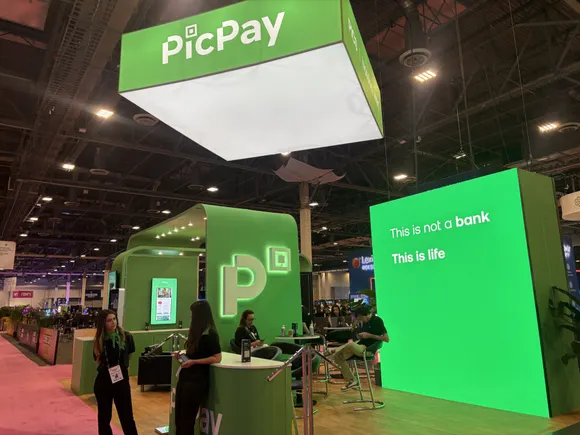
PicPay, the Brazilian digital bank, has had a eventful year: its parent company's IPO raised over $400 million, making it the first Brazilian company in four years to list in the U.S. But challenges include a federal investigation into alleged payroll fraud and a sharp stock decline after Brazil's election. CFO André Cazotto, a fintech veteran who joined in 2021 and was promoted to finance chief in August, remains focused on consolidating PicPay as one of Brazil's largest digital banks. He outlines a 'low and grow' credit strategy, the use of AI to reduce costs, and efforts to expand beyond its digital wallet roots. Despite a 60% drop in shares this year, Cazotto emphasizes execution and long-term vision, while Citi maintains a buy rating with a $24 target price.
Fragmented payments prevented Kin Insurance from scaling and forced reliance on multiple third-party platforms that didn't share information. By selecting the right payments partner, Kin Insurance successfully unified payments and built lasting value. Listen to their story in 'The connective tissue of insurance' on Spreaker.
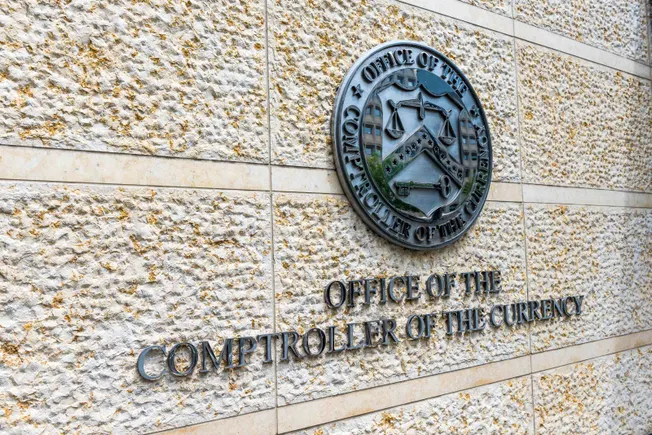
Galaxy Digital announced Thursday it has applied for a national trust bank charter with the Office of the Comptroller of the Currency. CEO Mike Novogratz said the charter would allow the firm to bring more services under a single federal framework and expand client offerings as adoption accelerates. Galaxy provides custody, trading, staking, and fiduciary investment advisory services. The application comes amid a surge in charter requests from fintechs and crypto firms, including Ripple's recent OCC approval for a national trust bank. The Independent Community Bankers of America has sued the OCC over the spike, arguing it creates regulatory gaps. A trust charter would not permit Galaxy to take deposits or lend commercially, but the company said OCC regulation would build on its more than 50 existing licenses across the U.S., Europe, and Asia.

Valley National Bank's $340 million acquisition of Bluevine, announced in September, aims to merge the fintech's digital capabilities with the bank's relationship banking model. Bluevine CEO Eyal Lifshitz and Valley COO Russ Barrett explain that the deal, expected to close in early 2027, will create a unified small-business banking segment led by Lifshitz. The integration brings $2.1 billion in deposits, 175,000 active small-business clients, and roughly 180 R&D employees to Valley, growing its small-business customer base 20-fold. Both executives emphasize shared cultural fit and the potential to accelerate innovation by combining technology with personalized advice.
Ripple has obtained unconditional approval from the Office of the Comptroller of the Currency to launch a national trust bank, nearly a year after conditional approval. The charter allows Ripple to provide fiduciary digital-asset custody, manage reserves for its stablecoin RLUSD, and act as collateral trustee, though it cannot take deposits or lend commercially. Ripple also announced expanded collaboration with BNY to broaden institutional digital-asset custody and explore tokenized trade finance, and a strategic partnership with Robinhood to make RLUSD available across its digital-asset ecosystem. The news follows Ripple's lengthy legal battle with the SEC, which sued in 2020 alleging XRP was a security; a 2023 ruling imposed a $125 million penalty, and the SEC later sought to drop the case. Ripple has been on an acquisition spree in 2025, buying Hidden Road, Rail, and GTreasury.

In an interview at Money20/20, Piermont Bank CEO Wendy Cai-Lee discussed the challenges newly chartered fintechs face in achieving good CAMELS ratings and the need for disciplined risk management in bank-fintech partnerships. She highlighted Piermont's focus on deepening existing client relationships, its consent order with the FDIC, and the bank's recent fintech partnerships with BlxckPay and MassPay. Cai-Lee also noted the potential impact of AI on fintechs' value propositions.

BitGo obtained an unconditional national trust charter in December and went public on the NYSE in January at a $2.59 billion valuation. At Money20/20 in Las Vegas, managing director Frank Wang said institutional interest has been noticeably stronger, with two RFPs from large financial institutions in a single day. BitGo offers banks either its software to self-custody digital assets or custody through BitGo Bank & Trust. Wang noted that banks are exploring stablecoins and tokenized deposits to avoid being left behind, and that the narrative has shifted from blockchain displacing banks to banks using blockchain to become better. The national charter preempts state money transmitter licenses, likely reducing costs. BitGo also has regulated entities in Germany and Singapore and a joint venture with Hana Bank in South Korea. The OCC's final rule implementing the Genius Act, effective Jan. 18, provides a regulatory framework for stablecoins.