


Technology

At Money20/20, Wells Fargo executive Faraz Shafiq detailed the bank's strategy to fundamentally transform operations with AI, centered on four core components: a hub-and-spoke operating model, prioritizing highest-impact use cases, moving fast with discipline, and upskilling its 197,000 employees. Shafiq highlighted tangible results, including a 40% boost in product sales rates from banker intelligence capabilities and a custom small language model for fraud detection, as the bank aims to differentiate through proprietary data and insights.

As AI becomes embedded in financial services, the reliability of customer data is under new pressure. AI readiness requires accurate, connected customer identities as an ongoing condition, supported by integrated data quality processes. Survey data from Melissa shows confidence in address, location, and contact data lags behind transactional data, and outdated records are the top AI data challenge. AI cannot determine on its own whether a customer record reflects a real person or business, and identity drift can lead to wrong conclusions in fraud, authentication, personalization, and credit decisions. Financial institutions should integrate address verification, electronic identity verification, and matching/deduplication tools into data quality operations, and treat identity as part of AI governance by monitoring both model behavior and the customer data it consumes.
Fragmented payments prevented Kin Insurance from scaling and forced reliance on multiple third-party platforms that didn't share information. By selecting the right payments partner, Kin Insurance successfully unified payments and built lasting value. Listen to their story in 'The connective tissue of insurance' on Spreaker.
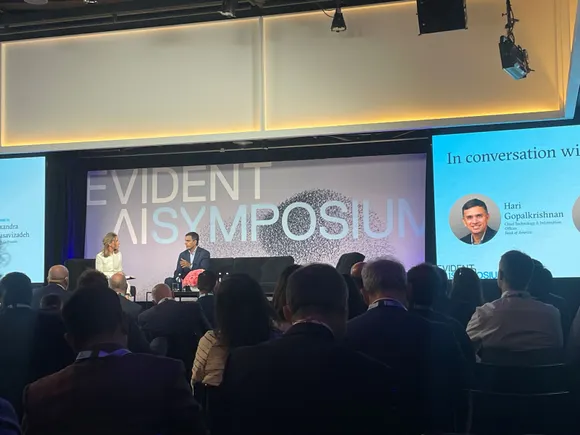
At the Evident AI Symposium, Bank of America's Hari Gopalkrishnan and Capital One's Prem Natarajan discussed how smaller AI models and model routing help manage AI costs. Bank of America's Orchestra routing layer uses a small classifier model to direct queries to the most cost-effective model, while Capital One distilled open weight models to reduce latency and boost engagement. Both banks also emphasized AI guardrails and data readiness.
In an interview at Money20/20, Elavon CEO Wally Mlynarski emphasized that trust and safety, not speed, should guide the development of agentic commerce. He cited the industry's 25-year struggle with fraud and the economic challenges of mobile wallet wars as key lessons. Mlynarski warned that rushing into agentic commerce without proper safeguards could harm consumers, and highlighted the need to understand value propositions and integrate economics across the payment chain. He also noted Elavon's role in supporting U.S. Bank's deposit and lending growth through embedded financial solutions for merchants.
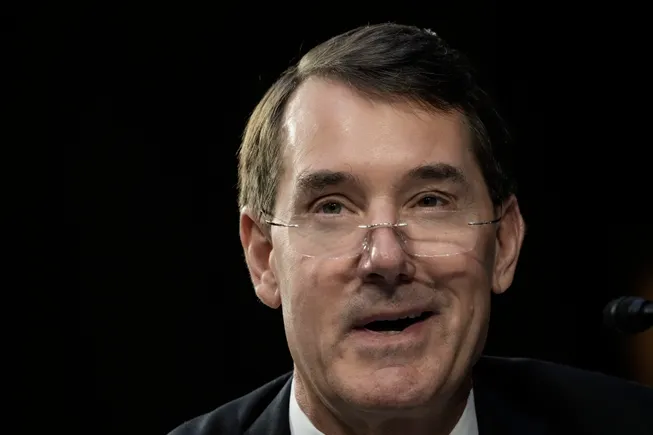
PNC CEO Bill Demchak predicts that banks lacking their own compute infrastructure will fall behind in AI, leading to increased M&A, particularly among small banks. He emphasizes PNC's focus on building its own AI capabilities, which will cost hundreds of millions to save billions annually, and warns that a large acquisition could delay AI progress. Demchak also discusses the human impact, including retraining and reduced offshore contractors, and PNC's approach to building versus buying AI technology.
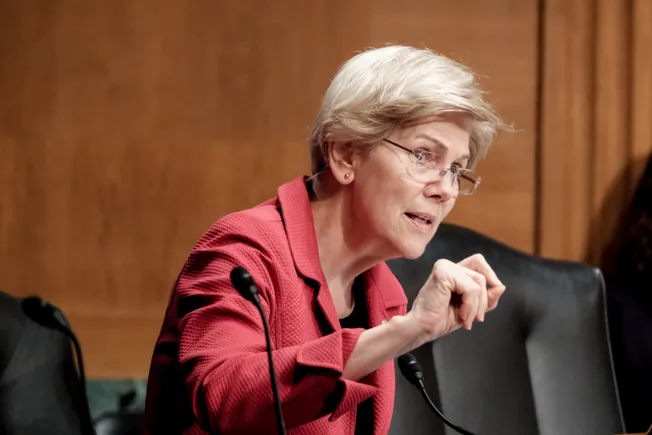
Sen. Elizabeth Warren, D-MA, has called on the Federal Reserve, OCC, and FDIC to rescind recent policy changes that she contends restrict bank examiners' ability to address supervisory threats. In letters to Fed Vice Chair for Supervision Michelle Bowman, Comptroller of the Currency Jonathan Gould, and FDIC Chair Travis Hill, Warren argued that the September Fed update and August OCC/FDIC definition change narrow the circumstances under which examiners can act, potentially undermining cybersecurity standards. She cited a Texas Bankers Association survey showing increased cyberattacks and rising investments in cybersecurity, warning that limiting examiners' powers could leave the financial system more vulnerable to AI-enabled threats.
Morgan Stanley’s wealth management division has evolved its AI use from conversational tools to orchestrated systems that manage workflows across enterprise platforms, according to Hina Shamsi, CIO of wealth management technology. The firm’s foundational investments in data and machine learning, including a shift from account-centric to relationship-based data views, have enabled next-best-action capabilities and generative AI. Now, the division is focusing on three agentic AI areas: client interaction, service and adviser assist agents. Shamsi emphasized the importance of guardrails, permissions, monitoring and human oversight as agentic capabilities expand.

Community banks face pressure to modernize lending processes or risk falling behind competitors. Finastra's Walter Wright explains that cloud-based lending compliance can improve efficiency and reduce risk without sacrificing the personal relationships that define community banking. He highlights survey data showing growing interest in cloud core systems and modernization investment, and addresses talent gaps and resilience concerns. Automating routine tasks like post-closing servicing can free staff to focus on exceptions and customer needs, while also preparing banks for responsible AI deployment.

Wells Fargo announced Thursday that Kleber Santos will become the sole chief executive of its consumer banking and lending business, while former co-CEO Saul Van Beurden will focus full-time on scaling artificial intelligence across the enterprise. The appointments are effective immediately. CEO Charlie Scharf said the move will help accelerate progress in both areas, citing significant opportunities to grow consumer businesses and use AI to transform operations and customer service. The bank has been expanding its AI capabilities, including using autonomous agents and improving customer experience, and recently ranked No. 5 globally and No. 3 in the U.S. on the Evident AI index.