


Regulations & Policy
The Federal Reserve on Thursday proposed rules for stablecoin issuers, requiring them to back stablecoins with high-quality, liquid assets such as Treasury bills and establishing an application process for banks seeking to issue stablecoins. The proposal, mandated by the Genius Act, includes capital requirements, risk management standards, custody rules, and procedures for appeals and hearings. Fed Gov. Michael Barr emphasized the need for strong guardrails and consumer protections. The Fed is behind the July deadline set by the Genius Act, and no agency has finalized stablecoin rules yet. The proposal will be open for comment for 60 days after publication in the Federal Register.
Online lending platform Avant applied for a de novo bank charter from the Office of the Comptroller of the Currency on Friday. The Chicago-based fintech, founded in 2013, provides credit cards and unsecured loans to middle-income Americans. CEO Al Goldstein said a charter would reduce Avant's cost of funds and allow it to operate under one regulatory framework, improving access to its products nationwide. Avant uses its proprietary machine learning tool CreditOS to assess creditworthiness. The application joins 42 other OCC de novo charter filings since January 2025, with 27 approved, two denied, and one returned. Michele Alt of Klaros Group, which advised Avant, called the filing an important milestone in expanding credit access.
Barclays is facing resistance from thousands of employees and the Unite union over its decision to increase minimum office attendance from two to three days a week starting Oct. 5. The union has signed an open letter calling for the policy to be reversed, seeking exemptions for employees with commutes over 40 minutes or 35 miles each way, flexible arrangements for those with childcare responsibilities, a one-off payment by March 2027 to offset costs, and a maximum one-day-a-week requirement for carers. Barclays says it continues to engage with Unite but has declined to meet the demands, stating that office requirements vary by business area. The change would affect roughly half of the bank's 45,000 U.K. employees, with operations and technology teams most impacted. The U.K. government also plans to make it harder for employers to block flexible working requests.
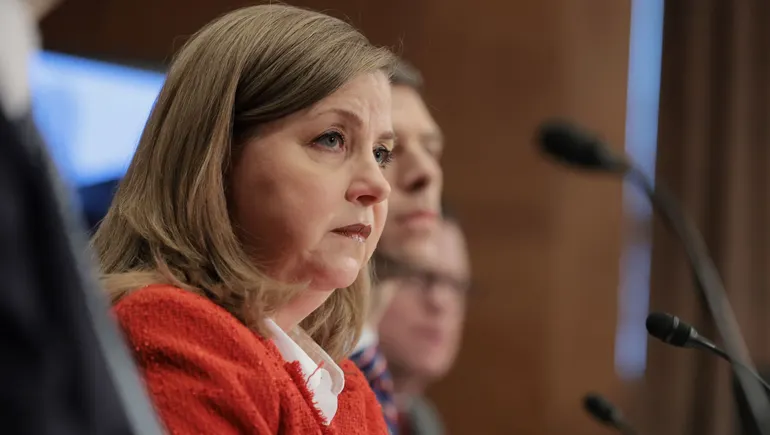
In a London luncheon, Federal Reserve Vice Chair for Supervision Michelle Bowman outlined potential changes to bank stress tests, provided an overview of a new independent review of Silicon Valley Bank's failure, and connected the two. She said the Fed will consider final stress test revisions in coming weeks and finalize risk-based capital and G-SIB surcharge changes. Bowman highlighted public comments on stress-test rules, including freezing balance sheets before scenario release and using two global market shock scenarios. She also wants comment on a revised model for noninterest income for the 2027 test. Regarding SVB, Bowman said the review found supervisory staff knew or should have known of vulnerabilities by March 2022 but failed to act promptly, citing a culture of risk aversion and unclear authority. She emphasized learning lessons to avoid repetition.
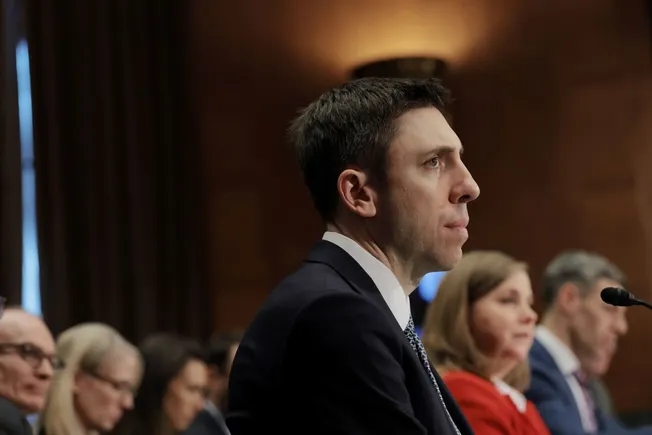
The Federal Deposit Insurance Corp. board on Thursday proposed changes to accelerate bank merger reviews and modernize the assessment framework. The rule would establish review timelines, including a rapid processing option for acquisitions of extremely small targets or certain operating subsidiaries that could be completed in as few as five days, according to FDIC Chair Travis Hill. It would also revamp competitive factor analysis to account for credit unions, thrifts, and centrally booked deposits. Hill noted that merger reviews have often taken too long, creating uncertainty and constraining planning. The FDIC has already reduced average review times from 107 days in 2023-2024 to 64 days so far this year. The proposal also includes limits on removing applications from expedited processing, tailored filing requirements, and a financial stability comparison. Industry lawyer Randy Benjenk called the proposal encouraging but noted that most bank mergers also require Federal Reserve approval, which often takes the longest, so unless the Fed adopts parallel reforms, the FDIC's changes may not significantly shorten transaction times. The FDIC also issued a proposed rule on parity between state-chartered and national banks, addressing uncertainty from recent state legislation and litigation. Comments on both proposals will be accepted for 60 days after Federal Register publication.

The Conference of State Bank Supervisors (CSBS) released a voluntary framework for examiners of state-chartered banks to assess financial institutions' use of artificial intelligence. The framework includes a core examiner guide, a work program, a nonbank supplement, a tiering worksheet, and a source list. It proposes eight questions examiners should consider, such as whether a bank uses AI, how it touches customers, and whether sensitive data passes through AI. It also introduces a three-tier risk system, from low-risk internal use to high-risk consumer-facing applications with limited human review. The CSBS notes the framework can also help banks self-assess their AI programs and prepare for examinations. This follows April federal guidance that excluded AI, leaving state regulators to fill the gap for the nearly 80% of FDIC-insured institutions they supervise.
The Senate on Tuesday blocked consideration of the Clarity Act, which aimed to establish a regulatory framework for digital assets like cryptocurrency, in a 50-49 vote. No Democrats supported the bill, and several Republicans, including Sens. Josh Hawley, Susan Collins, Jerry Moran, and Thom Tillis, voted against it. Tillis filed a motion to recommit, but the Senate is scheduled to leave Washington in early October and not return until after the November midterm elections, making a revival unlikely. The bill would have needed 60 votes to pass. Debate had centered on stablecoin yield and ethics provisions concerning President Donald Trump's crypto businesses. The failure means regulators, particularly the SEC and CFTC, will continue to shape digital asset rules, which some experts say are less stable than legislation. The outcome may also delay crypto business acquisitions and raises concerns about U.S. leadership in global crypto standards.
Enova International has withdrawn its applications to the Federal Reserve and the Office of the Comptroller of the Currency to acquire Grasshopper Bancorp. CEO Steve Cunningham cited a lack of clear standards for nonbanks seeking to become banks, saying the process is susceptible to political pressure. The withdrawal follows letters from state attorneys general and senators urging regulators to deny the deal over concerns about state usury laws and predatory lending. Enova said its future growth does not depend on becoming a bank.

Nubank, the Brazilian neobank, launched US operations last week through a partner bank model with Kansas City-based Lead Bank, before receiving full approval for a US banking license. The move coincides with the debut of Nu Global, a multicurrency digital account supporting no-fee money movement across more than 35 countries. Nubank received conditional approval from the OCC in January for a national bank, projected for a 2027 rollout. The US launch includes a 3.5% APY account and a Mastercard-partnered credit card with 1.5% cash back. CEO David Vélez cited regulatory delays for accelerating the launch. The article notes cautionary tales of other neobanks and analyst Dylan Lerner's view that Nubank is targeting a window of opportunity in administrative policy.

The Treasury Department on Monday imposed additional sanctions on VTB Bank, Russia's second-largest lender, for allegedly establishing correspondent relationships with sanctioned Iranian banks. Treasury Secretary Scott Bessent said the action is part of efforts to disrupt support for Iran. VTB has been under U.S. sanctions since 2022 over Russia's invasion of Ukraine, and its CEO faces charges. The sanctions are part of 'Operation Economic Outcast,' which recently targeted banks in Dubai and Turkey.