


Latest news
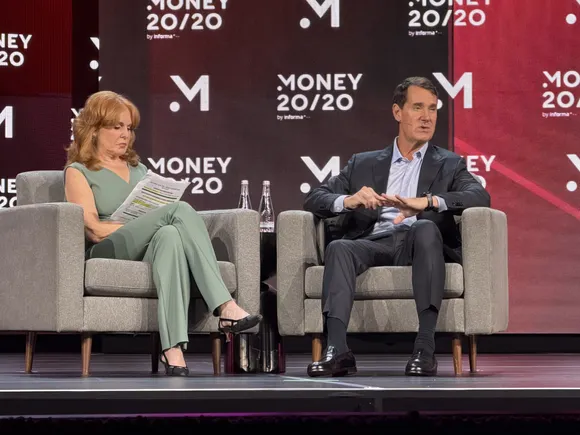
At Money20/20, PNC CEO Bill Demchak said AI agent-only financial transactions will never occur because banks won't allow transactions without human oversight. He warned that such agents could lead to fraud and 'mess with people's lives,' and suggested tech companies like Meta should bear liability for agentic transactions. Demchak noted PNC's aggressive AI push and its pause on M&A to avoid slowing AI progress. Several major banks, including JPMorgan Chase and Citi, are blocking AI agents from customer accounts.
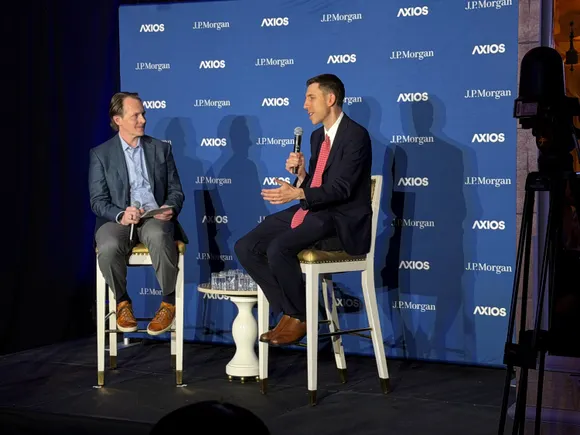
At an Axios event in Las Vegas, FDIC Chair Travis Hill said AI agents moving deposits on behalf of customers is a major concern for banks and regulators, with questions about how many depositors will delegate decision-making and the impact on the deposit landscape. He noted that big banks like Citi, Bank of America, and JPMorgan Chase have blocked external AI agents, and that accountability questions remain. Hill also said revised model risk management guidance doesn't work well for agentic and generative AI, and the FDIC is considering seeking public input. The agency is using AI for efficiency in supervision and failed bank resolutions but wants to move faster.
At the Money20/20 conference, Wells Fargo's Faraz Shafiq detailed the bank's strategic approach to AI transformation. The strategy centers on four core components: a hub-and-spoke operating model, prioritizing highest-impact use cases, balancing speed with governance, and upskilling employees. Shafiq highlighted tangible benefits, including a 40% boost in product sales rates from banker intelligence capabilities and a custom small language model for fraud detection that outperforms off-the-shelf models. Wells Fargo aims to fundamentally transform how the bank operates by leveraging its proprietary data and focusing on the most valuable applications.

Dearborn, Michigan-based DFCU Financial will acquire Sarasota, Florida-based Gulfside Bank, the companies announced Monday. The deal value was not disclosed. This is DFCU's fourth Florida expansion in as many years, following acquisitions of First Citrus Bank, MidWestOne Bank's Naples and Fort Myers operations, and Winter Park National Bank. The acquisition adds two branches, $344.6 million in assets, $294 million in deposits, and $253 million in loans as of June 30. It fills a coverage gap between Tampa/St. Petersburg and Naples/Fort Myers, giving DFCU a presence in four of Florida's seven largest metro areas. The deal is expected to integrate services in the second half of 2027, with Gulfside branches rebranded under the DFCU name. Gulfside CEO Dennis Murphy will become DFCU's Sarasota/Manatee area president. The transaction is the eighth credit union-bank deal in 2026, a slowdown from 22 in 2024 and 16 last year. The ICBA criticized such deals, while America's Credit Unions CEO defended credit unions' tax-exempt status.

TabaPay's 2024 near-acquisition of Synapse Financial fell through due to messy books, but CEO Rodney Robinson says the experience led the company to pursue a bank instead. TabaPay plans to buy Denver-based Transact Bank, rename it TabaBank, and operate it under TabaHoldings, a new bank holding company. The deal, expected to close in Q4 pending regulatory approval, will give TabaPay a fintech-focused bank with branches in Denver and Palo Alto. Robinson says TabaPay will continue working with its partner banks while growing TabaBank.
Fintech Ramp applied for a national trust bank charter with the Office of the Comptroller of the Currency, the company announced. If approved, the charter would allow Ramp to offer fiduciary investment management and digital-asset custody, but not deposit-taking or commercial lending. The application follows Ramp's $1.85 billion funding round and comes amid a lawsuit by the Independent Community Bankers of America challenging the OCC's approval of national trust bank charters, particularly for crypto companies.
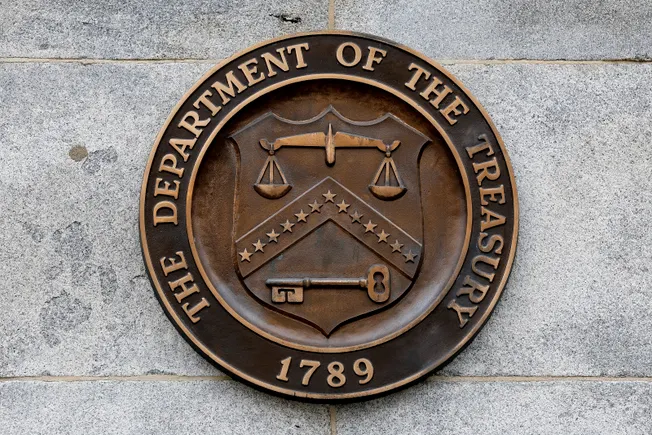
Speaking at the Money20/20 conference in Las Vegas, Carole House, founder and CEO of Penumbra Strategies and a former Treasury Department official, said regulators can be slow to respond to innovation but industry often doesn't acknowledge its role in driving understanding. She stressed that collaboration is crucial to combat threats to the financial system, especially amid burgeoning technologies including blockchain and agentic commerce. House advocated for more timely enforcement, clarity of regulatory frameworks, and information sharing, drawing lessons from cyber to share information instantaneously. She also highlighted the need for investments in digital identity to address fraud and the authenticity crisis fueled by AI deepfakes.

Evercore has named Nigel Dawn, global head of private capital advisory, and Naveen Nataraj, co-head of U.S. investment banking, as co-presidents effective Jan. 1. The move appears to establish a CEO succession line, though Chairman and CEO John Weinberg has agreed to remain in his roles for at least three more years. Daniel Mendelow will become sole head of U.S. investment banking, and Jason Sobol will become chair of the unit. Founder Roger Altman said no ultimate succession decision has been made.
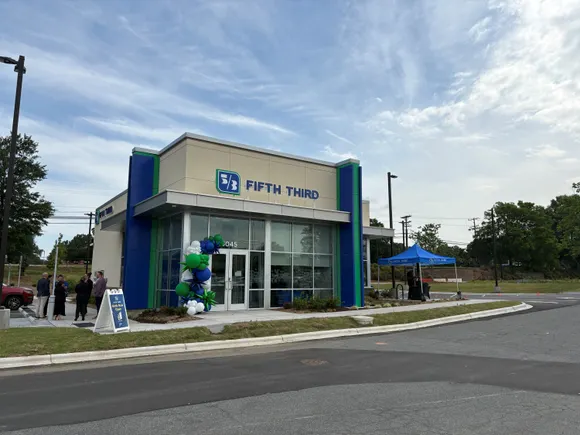
During Fifth Third's Q3 earnings call, CEO Tim Spence and CFO Bryan Preston discussed the threat of AI-driven cash optimization, particularly following Meta's launch of AI assistant Muse. Spence argued that banks with physical distribution and added value are less at risk than online-only lenders, while Preston said concerns are 'likely overblown' given Fifth Third's $3,000 median checking balance and operational commercial deposits. The bank doesn't currently allow AI agents to initiate transactions, and Preston emphasized the need for accountability questions to be settled first. Spence highlighted the opportunity for incumbents to integrate valuable services into their apps, leveraging bank-grade security and data separation. Fifth Third reported 3% sequential growth in average core deposits to $236 billion, with deposit costs rising slightly.

Huntington Bank has launched 1866 Studio, an AI-powered platform designed to help small businesses manage and grow. Named after the bank's founding year, the platform uses Google Gemini and eight trained AI agents to simplify workflows, provide business launch support, marketing strategy, and financing guidance. Available to all small-business owners, not just Huntington customers, it aims to be a customer acquisition tool and will evolve to support the full business lifecycle.