


Latest news

BitGo obtained an unconditional national trust charter in December and went public on the NYSE in January at a $2.59 billion valuation. At Money20/20 in Las Vegas, managing director Frank Wang said institutional interest has been noticeably stronger, with two RFPs from large financial institutions in a single day. BitGo offers banks either its software to self-custody digital assets or custody through BitGo Bank & Trust. Wang noted that banks are exploring stablecoins and tokenized deposits to avoid being left behind, and that the narrative has shifted from blockchain displacing banks to banks using blockchain to become better. The national charter preempts state money transmitter licenses, likely reducing costs. BitGo also has regulated entities in Germany and Singapore and a joint venture with Hana Bank in South Korea. The OCC's final rule implementing the Genius Act, effective Jan. 18, provides a regulatory framework for stablecoins.

American Express will cut about 3,500 employees, nearly 4.5% of its global workforce, as part of a restructuring aimed at streamlining operations, boosting productivity, and accelerating decision-making. CEO Stephen Squeri said the move is necessary to become more agile and efficient amid intensifying competition from big banks and new entrants like Brex and Ramp, which are leveraging AI. The announcement came with third-quarter earnings, which showed net income up 28% to $3.71 billion and revenue up 9% to $20 billion. The company also highlighted AI opportunities for personalizing customer services.
At Money20/20, Citi's global head of AI, digital and data platforms, Naveed Anwar, said the bank is not rushing to let external AI agents connect to its systems. Citi has blocked agentic access beyond open banking read-only access, and Anwar emphasized the need for a 'know your agent' process to meet regulatory demands. Other banks like JPMorgan Chase, Bank of America, Morgan Stanley, Charles Schwab, and Fifth Third have also restricted AI agent access. Citi is focusing on enhancing client experience through AI in document processing and chat features, with 15 AI use cases live and about 60 more rolling out.
Buy now, pay later company Sezzle has applied for a national bank charter with the Office of the Comptroller of the Currency. If approved, the new bank would offer a broad range of banking products and services, including checking and savings accounts, targeting digitally native consumers. The application marks a shift from Sezzle's initial plan to seek an industrial loan company license from Utah regulators, prompted by new BNPL regulations in states like New York, Illinois, and Oregon, and criticism of the ILC structure. The OCC review process, involving the Federal Reserve and FDIC, is expected to take 12 to 18 months. Sezzle joins other fintechs like Block, Ramp, Avant, and Modern Treasury in seeking OCC charters this year.
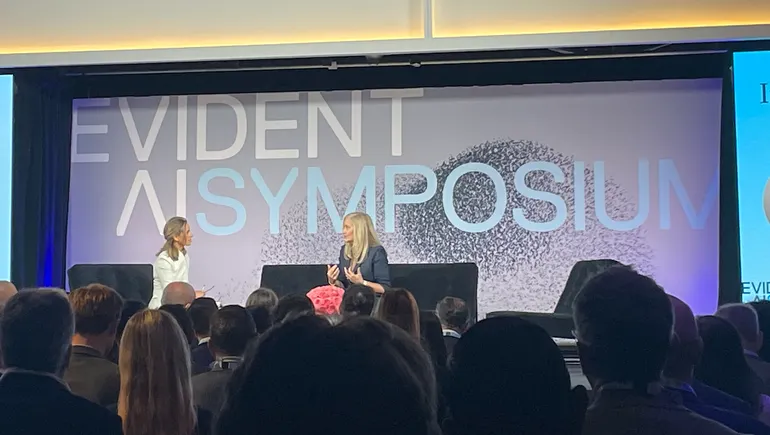
At the Evident AI Symposium, JPMorgan Chase CIO Lori Beer emphasized that security and risk management are central to the bank's accelerated AI use, including its LLM Suite platform supporting 1,000 business applications and used by 200,000 employees. Goldman Sachs CIO Marco Argenti highlighted the challenge of aligning AI agents with enterprise standards, noting that agents are stochastic and may misbehave. Both leaders stressed the need for robust controls, dynamic guardrails, and balancing risk with innovation. JPMorgan has shifted from counting use cases to 50 strategic initiatives to measure tangible business value. Goldman Sachs partnered with Anthropic to embed forward-deployed engineers, a model also adopted by Google, Microsoft, and AWS.
Barclays is cutting roughly 5,000 full-time employees, or 5% of its workforce, this year, with heavy impact expected in support functions such as developers as artificial intelligence boosts productivity, CFO Anna Cross said Thursday. The bank reduced its workforce by about 1,000 in the first half, so the remaining 4,000 cuts are expected by December. CEO C.S. Venkatakrishnan said the bank intends to employ AI at scale but called AI 'the icing on the cake, not the cake.' The announcement came as Barclays reported third-quarter earnings, including a 19% year-over-year drop in fixed income and currency trading revenue, though overall profit rose 12% to $3.1 billion and equities trading revenue jumped 47%.

Early Warning Services is targeting the 100 largest U.S. merchants for its Paze digital wallet over the next three years after a 2025 revamp. CEO Cameron Fowler said Paze is focused on habituation of high-volume transactions. The wallet, owned by seven major banks, struggled with slow adoption but saw growth after a product overhaul and a summer promotion offering $10 credits. Paze has added about 220 million cards and aims to exceed its 2026 transaction goal by four times. It targets consumers not tied to Apple or other wallets, emphasizing bank-backed security.
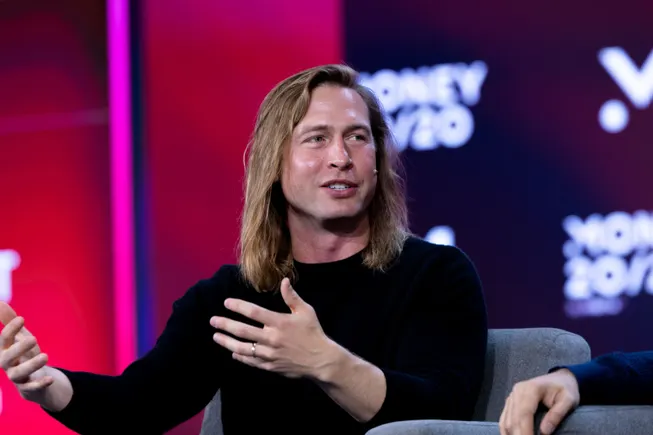
Speaking at Money20/20 in Las Vegas, Plaid co-founder and CEO Zach Perret said AI platforms like ChatGPT and Claude could become a monetization lever for financial services, starting with card issuance. He also discussed the impact of AI agents on banking and warned that AI-enabled fraud and agent swarms could make the coming year 'scary' from a security perspective, calling the Deloitte projection of $40 billion in U.S. fraud losses by next year a 'conservative estimate.'
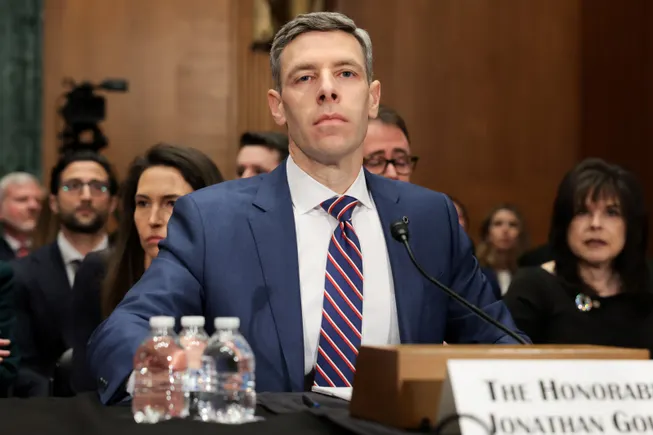
The OCC issued its final rule to implement the GENIUS Act, effective Jan. 18, providing long-awaited guidance for banks and OCC-regulated entities that hold, issue, and move stablecoins. The rule bans direct yield payments from stablecoin issuers but allows case-by-case evaluation of third-party reward arrangements. It does not address Bank Secrecy Act, anti-money laundering, or OFAC sanctions, which will be covered in a separate rulemaking with the Treasury. The OCC will later announce when it will accept applications and waiver requests. Treasury Secretary Scott Bessent called the rule a 'watershed moment,' while the ICBA raised concerns about risks to community bank lending.
Cross River Bank's parent company has agreed to acquire Accrue, a branded-wallet specialist, to enhance customer-loyalty capabilities and provide a complete embedded finance stack. The deal value and timeline were not disclosed. Accrue, launched in 2021, enables merchants to connect stored value, payments, rewards, and customer engagement. Cross River CEO Gilles Gade said payments and loyalty are becoming one, and every brand wants its own wallet. Accrue CEO Michael Hershfield will take on a leadership role building out Cross River's embedded finance offerings, and the Accrue team will join the bank.