


Latest news

The crypto sector has lost over 26,000 jobs in 2022 and nearly 1,900 in 2023, but Binance plans to increase its workforce by 15-30% this year. While traditional banks like Goldman Sachs see opportunity in crypto, others remain cautious amid regulatory uncertainty and fallout from FTX's collapse.
Twenty-one Republican state attorneys general jointly sent a letter to the two major proxy voting advisory firms, ISS and Glass Lewis, demanding explanations by January 31 on their positions regarding net-zero emissions, board diversity, and the Taiwan issue. This move is seen as a new escalation by Republicans on ESG issues, following previous contract restrictions or divestment requirements imposed on large financial institutions by several states.
A group of 21 Republican attorneys general has written to Institutional Shareholder Services and Glass Lewis, demanding they stop making shareholder voting recommendations on climate and board diversity. The AGs argue that such recommendations contradict the advisers' duty to secure the best financial results for investors, citing doubts about the feasibility of net-zero emissions by 2050 and concerns over China's emissions and potential use of trade money to fund an invasion of Taiwan. They also allege conflicts of interest regarding ESG services and claim diversity quotas may violate state anti-discrimination laws. The letter asks for justification by Jan. 31 and may be a precursor to legal action. The escalation follows earlier moves by GOP officials against BlackRock and major banks over ESG practices, and comes as BlackRock CEO Larry Fink describes attacks as 'personal' and 'ugly'.

Three years ago, FIS and Fiserv each completed multi-billion-dollar acquisitions, promising to boost profits through economies of scale. However, as the pandemic accelerated digitalization, fintech companies like Square, Toast, and Stripe have captured market share, leaving the two giants struggling to grow in merchant and banking services. Investors are pressuring for business splits, with FIS already facing attention from activist investors D.E. Shaw and Jana Partners, while Fiserv has responded to pressure through layoffs and asset sales.

FIS and Fiserv, which made multi-billion-dollar acquisitions in 2019 to achieve scale, are now under pressure from activist investors to divest assets and cut costs as they face fierce competition from nimble fintechs. Both companies are slashing jobs and restructuring, but their stock performance and profitability vary. The article examines their challenges, the changing payments landscape, and whether divestitures or further acquisitions are the answer.
Through the acquisitions of Even and One Finance, Walmart is testing a banking platform called One. Experts point out that Walmart, without customer acquisition costs, leveraging its brand and store network, could pose a significant challenge to traditional banks and emerging digital banks.
Walmart is beta-testing its One banking platform with employees and plans to offer it to customers, leveraging its 1.6 million U.S. employees and over 100 million weekly shoppers. The retail giant's scale and brand recognition could give it a major advantage over traditional banks and neobanks, as it avoids high customer acquisition costs. Experts note that Walmart's move into financial services, including its acquisitions of Even Responsible Finance and One Finance, poses a significant threat to the banking industry, especially as nonbanks like Apple and fintechs reshape the landscape. Walmart's existing financial services, such as prepaid debit cards and money transfers, have already made customers comfortable with the retailer handling their finances.

The Banking-as-a-Service (BaaS) model is expanding rapidly, but regulators are still striving to understand and regulate this field. Acting Comptroller of the Currency (OCC) Michael Hsu emphasized in a September speech that BaaS is changing the risk profile of the financial industry and plans to implement tiered regulation for bank-fintech partnerships. Meanwhile, the global BaaS market is expected to reach $74.55 billion by 2030, but increased regulatory scrutiny is prompting banks and fintech companies to be more cautious. Community banks view BaaS as a growth opportunity but also face compliance challenges.

Banking-as-a-service (BaaS) is drawing increased regulatory attention as fintech partnerships grow. Acting Comptroller Michael Hsu said the model represents the 'de-integration' of banking, making it harder to distinguish where the bank stops and the tech firm starts. The OCC aims to subdivide bank-fintech arrangements by risk profile and is asking who is responsible when things break. House Republicans, led by Rep. Patrick McHenry, warned that more regulation could stifle innovation. The global BaaS market is expected to reach $74.55 billion by 2030, and a Finastra report found 85% of 1,600 senior banking executives are implementing or planning BaaS. An OCC enforcement action against Blue Ridge Bank shows regulatory concerns. For community banks, BaaS offers a capital-light way to grow deposits, with acquisition costs potentially falling to $5-$35 from $100-$200.
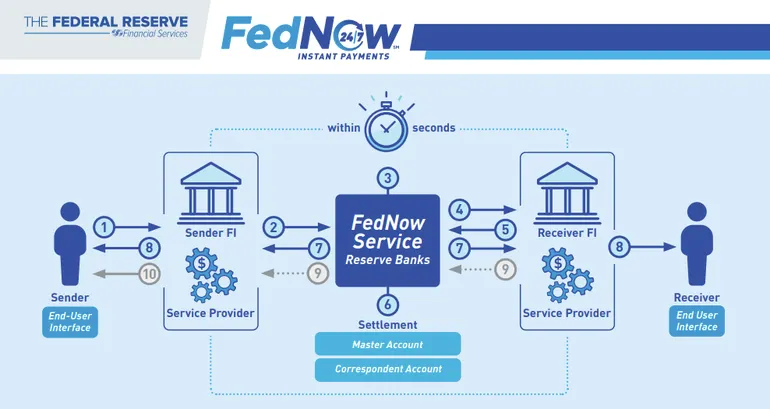
In this opinion piece, Rina Wulfing of Wise warns that the Federal Reserve's FedNow instant payments system, launching next summer, risks falling short by excluding nonbanks and cross-border payments. She highlights the importance of cross-border payments for remittances and global business, and criticizes the Fed's reluctance to grant nonbank access. Wulfing calls for the Fed to evolve past outdated rules and include diverse providers to ensure FedNow's success and address consumer needs.