


Latest news

Navy Federal Credit Union partnered with Qualtrics on a pilot to compare synthetic data with traditional human panels for member research. The test found that synthetic responses closely matched human responses on functional questions, with mean scores within 0.25%, but over-indexed on efficiency and financial benefits while underestimating empathy. Synthetic data also reduced acquiescence and social desirability biases. However, synthetic responses struggled with emotional nuance and were less discerning on trust across industries. Experts advise using synthetic data to complement, not replace, human research, especially for hard-to-reach audiences and rapid feedback, while reserving human panels for emotionally charged topics.
As fintechs like Klarna and Affirm expand into traditional banking territory, major U.S. banks are responding with their own installment lending products. Four of the five largest U.S. banks now offer pay-later plans on credit cards, and JPMorgan Chase has a 'Pay in 4' option for debit card purchases. Bank of America recently introduced a flexible-payment option for credit accounts. According to the CFPB, about 54 million Americans used BNPL in 2023, with loan originations surging from 20 million in 2019 to 336 million in 2023. A JD Power survey found that 37% of U.S. adults used BNPL in the past 90 days, and users expressed higher satisfaction with bank-provided BNPL products than with those from traditional providers. Affirm is now offering its technology to smaller banks and credit unions to enable BNPL-style lending on debit cards, targeting the 130 million 'debit first' consumers. Banks like KeyBank are monitoring the trend but have not yet launched their own BNPL products.

Nuvei, a Canadian payments processor, has agreed to acquire New York City-based Payoneer Global for $2.75 billion, according to a Monday press release. The combined business aims to offer a more complete platform for accepting payments, sending funds, issuing cards, managing treasury and FX needs, and accessing embedded financial services at scale, said Nuvei Chairman and CEO Phil Fayer. The merger is also expected to support new payments strategies in agentic commerce and stablecoin payments. With Payoneer, Nuvei's infrastructure will be bolstered to support major digital marketplaces including Amazon, eBay, Walmart, and Etsy. The combination merges Nuvei's payment acceptance capabilities with Payoneer's cross-border payouts, multi-currency accounts, banking network, and same-day and real-time settlement in more than 150 markets. Payoneer also brings regulatory credentials, including licenses for online payment services in China and authorization as a cross-border payment aggregator in India. Benchmark senior research analyst Mark Palmer noted that Payoneer will enhance Nuvei's ability to process payments for small and midsize businesses, especially e-commerce sellers and freelancers, across emerging markets in Southeast Asia and Latin America, and provide connectivity with leading online marketplaces such as Amazon.com, Fiverr, and eBay. Montreal-based Nuvei processes payments in more than 200 markets, acquires transactions locally in 52 markets, and supports 150 currencies and 720 alternative payment methods. Both companies also have synergy in stablecoin movement and conversion. The transaction is expected to close by the middle of next year.
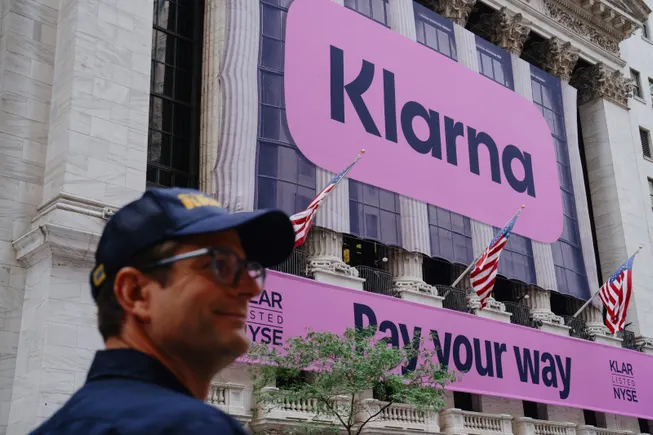
Pagaya Technologies filed a lawsuit against Klarna on May 14, alleging that the buy now, pay later firm misappropriated trade secrets related to point-of-sale loan underwriting. The two companies had partnered since 2022, with Pagaya assessing subprime customers for Klarna at checkout. Pagaya claims Klarna aimed to absorb its underwriting technology, build competing capabilities, and cut Pagaya out of the business. Klarna denies the allegations, stating it terminated the relationship on March 25, 2026, and will defend itself vigorously. The lawsuit also alleges Klarna CEO Sebastian Siemiatkowski downplayed Pagaya's role and falsely claimed Klarna did not outsource risk underwriting.

Klarna is expanding its U.S. financial services offerings with a new high-yield savings account, offered through Salt Lake City-based WebBank and eligible for federal deposit insurance. The account pays a base rate of 3.28% without membership, rising to 3.78% for balances up to $50,000 in the highest tier of Klarna's four monthly membership programs. The move follows Klarna's earlier debit card account, Klarna Balance, which now pays 0.01% interest. Klarna, which operates as a bank in Europe with $12.3 billion in deposits across 11 markets, aims to deepen daily consumer engagement beyond BNPL. The launch reflects a broader trend among BNPL providers like Affirm, PayPal, and Sezzle seeking to expand into banking and financial services.

Nubank has appointed longtime Visa executive Rob Livingston as its new CFO, effective July 13, succeeding Guilherme Lago after five years. The move comes shortly after Dutch payments processor Adyen announced that its CFO, Ethan Tandowsky, will leave the company on August 31 for an opportunity outside fintech. Nubank, which recently received conditional approval for a U.S. national bank, reported strong Q1 results with net income up 41% year-over-year. Adyen's supervisory board will begin searching for a replacement, and the company emphasized a seamless transition. Both transitions occur as the companies pursue U.S. expansion amid competitive pressures.

Mark Burgess, CEO of Alaska Credit Union 1, refers to the state's areas without financial services as the 'financial tundra.' According to 2024 Federal Reserve data, Alaska has 39 banking deserts and 20 potential deserts, where 25% of the population resides. The credit union, with assets of about $1.5 billion and 15 branches statewide, will open a new branch in Homer this summer and is evaluating the possibility of expanding services in about 16 communities, including the use of interactive teller machines and remote loan officers.

Credit Union 1, led by CEO Mark Burgess, is addressing Alaska's 'banking tundras'—areas with limited financial services. With 39 banking deserts and 20 potential deserts, 25% of the state's population is affected, and about 65% of majority American Indian or Alaska Native communities live in such areas. The credit union, with $1.5 billion in assets and 15 branches, plans to open a branch in Homer this summer and is evaluating about 16 communities on its watchlist. It uses technology like interactive teller machines and video-conferencing loan officers to serve remote areas, while maintaining a local presence. Challenges include high communication costs and infrastructure, but Burgess emphasizes adapting technology to augment, not replace, relationships.

The White House nominated John Crews, Treasury Department deputy assistant secretary for financial institutions policy, to serve as a National Credit Union Administration board member. If confirmed by the Senate, Crews would replace Kyle Hauptman as NCUA chair and sole board member. Crews' term would run through Aug. 2, 2031. The NCUA has operated without a quorum since April 2025, when President Donald Trump fired two Democratic board members, Todd Harper and Tanya Otsuka, who sued and were reinstated by a federal judge before an appeals court granted an emergency stay. Scott Simpson, CEO of America's Credit Unions, welcomed the nomination, citing Crews' Treasury experience and approach to innovation and expanding access to affordable financial services.

Interra Credit Union has agreed to acquire The Hicksville Bank in an all-cash deal, the companies announced Wednesday. The Hicksville Bank, headquartered in Hicksville, Ohio, had $217 million in assets, $137 million in loans, and $195 million in deposits as of Dec. 31, 2025. The transaction awaits regulatory approval and approval from shareholders of the bank's holding company, Empire Bancshares, and is expected to close by late fall this year. Interra, founded in 1932, has about 90,000 members and 16 branches across northwestern Indiana, while The Hicksville Bank, founded in 1901, has four locations. The credit union said no branch closings or employee cuts will occur due to the acquisition. The deal is the fourth whole-bank acquisition by a credit union announced this year, following similar deals in March, February, and January. A record 22 credit union-bank deals were announced in 2024, and 16 were announced last year. The pace of such activity has drawn criticism from bank trade groups, including the Independent Community Bankers of America, which has called for credit unions with more than $1 billion in assets to be taxed.