


Latest news

Portrait Bank, central Florida's first de novo in nearly a decade, opened Saturday after receiving final approval from the Florida Office of Financial Regulation three months ago. Led by banking veteran Erik Weiner, the bank raised $43 million from 256 local investors, exceeding the roughly $28 million regulators required. After gaining its charter in June, the team spent the summer onboarding small to mid-size businesses, individuals, and private wealth clients. Weiner said consolidation has cut the number of banks headquartered in central Florida from 38 in 2000 to about half a dozen, reducing personalized service and local decision-making. Portrait aims to serve the growing region, where Orlando's population expanded 1.3% in 2025, above Florida's 0.8% growth rate.

Ally has launched its Loyally rewards program, aimed at deepening customer engagement and primacy. The digital bank, which piloted the program earlier this year and rolled it out to all customers in May, seeks to build on its high-yield savings legacy and grow relevancy in everyday spending and investing. Ally's retail bank had about 3.6 million customers as of the second quarter, up 7% year over year, with about $144 billion in deposit balances. The program offers everyday perks, experiences, and personalized offers, with no fees and no minimum balance requirements. About 75% of new checking and savings customers are Gen Z and millennials, who are the highest users of the program. Ally declined to disclose its investment in the program but called it a long-term commitment to deepening customer relationships.

Adyen has hired Niclas Neglén, Klarna's outgoing CFO, as its next chief financial officer, effective Feb. 1. Neglén will succeed interim CFO Hwa Tsao, who will become SVP of group finance. The appointment fills a vacancy left by Ethan Tandowsky's departure on Aug. 31. Adyen CEO Pieter van der Does said Neglén's experience aligns with the company's growth journey. Neglén previously served as CFO and COO for EMEA at HSBC's private bank and held senior financial roles at General Electric. Adyen also reaffirmed its financial guidance and noted recent leadership changes and acquisitions.

Beacon Financial, formed a year ago from the merger of Brookline Bank and Berkshire Bank, has named COO Sean Gray as its new president and CEO, effective Monday. Gray succeeds Paul Perrault, who announced his retirement last week. Perrault will remain a consultant for a year at $120,000 per month and stay eligible for a 2026 performance bonus. Gray, who joined Berkshire in 2006 and served as its president and COO from 2018 to 2025, also led the merger integration. Board chair David Brunelle called Gray's appointment a catalyst for the company's next phase of profitable growth. Analysts said the move resolves investor questions about succession planning. Beacon, with $22.3 billion in assets, completed its core systems conversion and rebranding in February and had realized $52 million in projected cost savings by July.
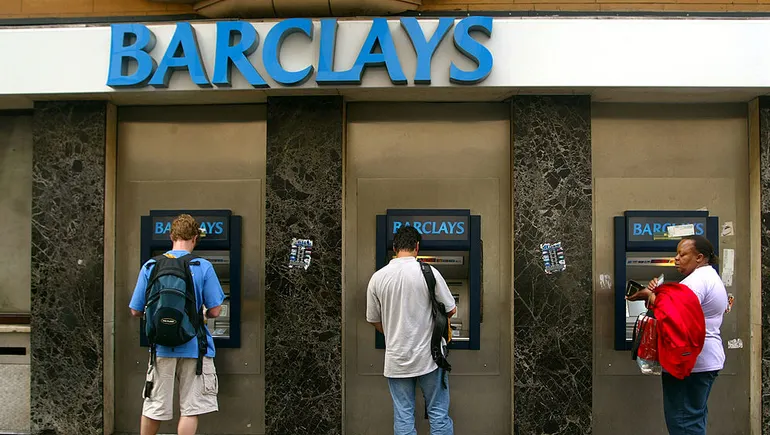
Barclays is facing resistance from thousands of employees and the Unite union over its decision to increase minimum office attendance from two to three days a week starting Oct. 5. The union has signed an open letter calling for the policy to be reversed, seeking exemptions for employees with commutes over 40 minutes or 35 miles each way, flexible arrangements for those with childcare responsibilities, a one-off payment by March 2027 to offset costs, and a maximum one-day-a-week requirement for carers. Barclays says it continues to engage with Unite but has declined to meet the demands, stating that office requirements vary by business area. The change would affect roughly half of the bank's 45,000 U.K. employees, with operations and technology teams most impacted. The U.K. government also plans to make it harder for employers to block flexible working requests.
The Office of the Comptroller of the Currency conditionally approved three national trust charters on Friday: de novos Agora National Trust Bank and Catena Trust Bank, and Bastion Platforms Trust Co., which is converting from a state charter. The approvals come with conditions, including minimum tier 1 capital and liquid asset requirements. Bastion white-labels stablecoins, Agora issues AUSD, and Catena Labs is developing financial infrastructure for AI agents. Full approvals depend on satisfying OCC conditions.

Nola Bank, Louisiana's first new lender in 16 years, opened Sept. 14 after receiving final regulatory approval on Sept. 11. The New Orleans-based de novo raised $29.2 million and aims to challenge bigger-bank dominance by focusing on small businesses and the underbanked. CEO Joe Omner noted the region's consolidation and the impact of Hurricane Katrina on new bank formation. The bank is applying for minority depository institution status with a multiracial designation. It emphasizes local decision-making, technology, and community ties to compete with larger institutions.

The cross-border payments market, once dominated by banks, is becoming highly competitive as fintechs enter through bank partnerships or direct apps. Their goal is to reduce the number of parties involved, cutting fees and speeding transactions. Stablecoins enable direct wallet-to-wallet transfers, bypassing correspondent banking, while blockchain adds transparency. Fintechs also help digitalize paperwork and data sharing. However, banks retain advantages in customer relationships, local currency movement, and regulatory compliance. The question is when fintechs will challenge banks on these fronts.

In a London luncheon, Federal Reserve Vice Chair for Supervision Michelle Bowman outlined potential changes to bank stress tests, provided an overview of a new independent review of Silicon Valley Bank's failure, and connected the two. She said the Fed will consider final stress test revisions in coming weeks and finalize risk-based capital and G-SIB surcharge changes. Bowman highlighted public comments on stress-test rules, including freezing balance sheets before scenario release and using two global market shock scenarios. She also wants comment on a revised model for noninterest income for the 2027 test. Regarding SVB, Bowman said the review found supervisory staff knew or should have known of vulnerabilities by March 2022 but failed to act promptly, citing a culture of risk aversion and unclear authority. She emphasized learning lessons to avoid repetition.
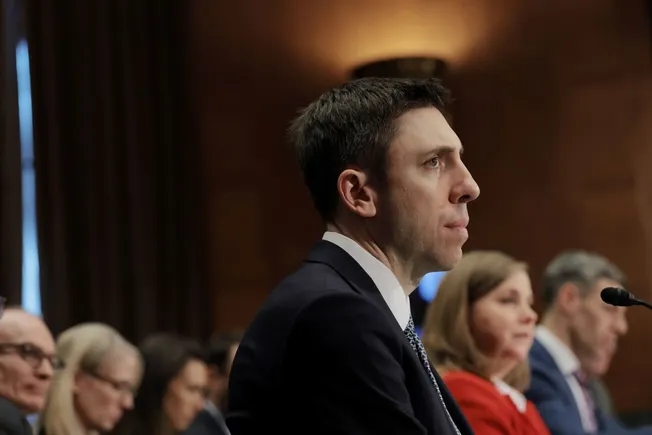
The Federal Deposit Insurance Corp. board on Thursday proposed changes to accelerate bank merger reviews and modernize the assessment framework. The rule would establish review timelines, including a rapid processing option for acquisitions of extremely small targets or certain operating subsidiaries that could be completed in as few as five days, according to FDIC Chair Travis Hill. It would also revamp competitive factor analysis to account for credit unions, thrifts, and centrally booked deposits. Hill noted that merger reviews have often taken too long, creating uncertainty and constraining planning. The FDIC has already reduced average review times from 107 days in 2023-2024 to 64 days so far this year. The proposal also includes limits on removing applications from expedited processing, tailored filing requirements, and a financial stability comparison. Industry lawyer Randy Benjenk called the proposal encouraging but noted that most bank mergers also require Federal Reserve approval, which often takes the longest, so unless the Fed adopts parallel reforms, the FDIC's changes may not significantly shorten transaction times. The FDIC also issued a proposed rule on parity between state-chartered and national banks, addressing uncertainty from recent state legislation and litigation. Comments on both proposals will be accepted for 60 days after Federal Register publication.