


Latest news
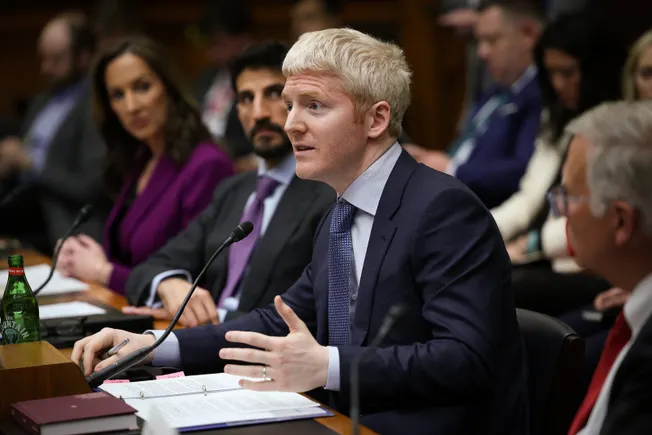
Former Stripe employees have left the digital payments processor to launch fintech startups, contributing to the sector's expansion. Stripe's culture of curiosity and technical leadership has fostered entrepreneurship, with alumni founding companies like Circuit & Chisel, Increase, Latitude Global, Lemma Technologies, and New Generation. These startups are entering an economy influenced by AI and cryptocurrency investments, potentially reviving investor interest in fintech. Stripe, valued at $159 billion, processes 1.6% of global economic output and is the fourth-most valuable venture-backed company.

Customer loyalty in financial services has never mattered more or been harder to earn. Despite significant investment, banks and fintechs are still falling short as acquisition costs rise and switching gets easier. Customers split financial activity across providers, making it harder for any institution to know if it's the primary relationship. The article argues the question isn't whether loyalty matters but whether institutions are playing the right game. It highlights four core tactics: daily engagement through micro-interactions, transparency in rewards, ease of redemption, and personalization. It explains that the loyalty gap is structural and philosophical, not primarily a budget problem, and that the emerging playbook combines fintech-style agility with banking-grade trust. The real divide is modern plays versus yesterday's rulebook, daily value versus deferred value, and treating loyalty as a living strategy rather than a product feature.
The Federal Reserve on Thursday proposed rules for stablecoin issuers, requiring them to back stablecoins with high-quality, liquid assets such as Treasury bills and establishing an application process for banks seeking to issue stablecoins. The proposal, mandated by the Genius Act, includes capital requirements, risk management standards, custody rules, and procedures for appeals and hearings. Fed Gov. Michael Barr emphasized the need for strong guardrails and consumer protections. The Fed is behind the July deadline set by the Genius Act, and no agency has finalized stablecoin rules yet. The proposal will be open for comment for 60 days after publication in the Federal Register.
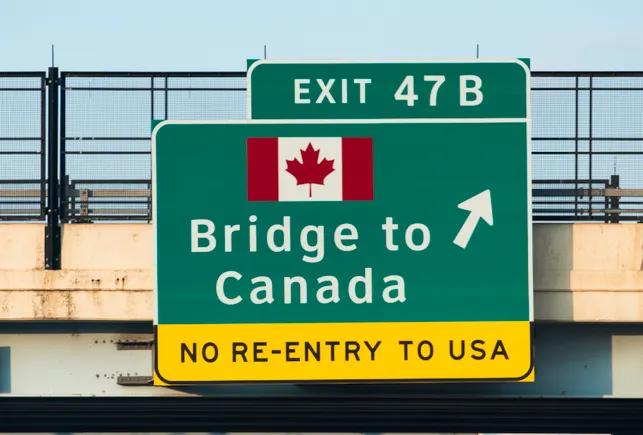
Family First Credit Union CEO Jane Smith is no longer employed by the $96.8 million-asset institution after a photo she created using ChatGPT, which showed her family in 'Lake America' sweatshirts, went viral and sparked outrage in Canada. The credit union named COO Jason Acosta as interim CEO and apologized. Smith said the image was AI-generated and meant as a joke about President Trump's executive order renaming Lake Ontario, but she acknowledged it was insensitive and hurtful. The incident occurred around the anniversary of 9/11, drawing criticism from Canadians.
Huntington Bank has appointed Ameesh Vakharia as chief marketing and digital products officer, uniting its marketing and digital efforts into one team. In an interview, Vakharia explains how the combined structure aims to deliver consistent brand and product experiences across channels, the role of data and AI in personalization, and the bank's focus on customer-centric innovation as it expands across 21 states with $284 billion in assets.

WestStar Bank has agreed to acquire Albuquerque-based Southwest Capital Bank in a deal expected to close in the first quarter of 2027. The transaction will expand WestStar's New Mexico presence from one branch to seven and create a lender with $3.8 billion in assets, $3.3 billion in deposits and $2.9 billion in loans. Financial terms were not disclosed. Southwest Capital CEO Chez Steel will become the combined bank's New Mexico president. The deal follows the collapse of Southwest Capital's proposed acquisition by U.S. Eagle Federal Credit Union in 2024 after failing to receive regulatory approval.
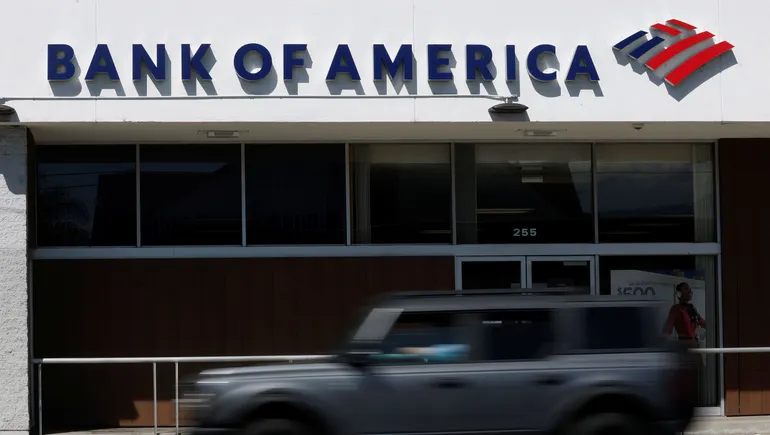
Bank of America is aggressively hiring and developing business bankers to capture the growing opportunity in small-business banking, according to Sharon Miller, president of business banking. Competition for talent has intensified, with job openings at major competitors up over 105% from last year. BofA is focusing on internal talent development, hiring from banks of all sizes, and leveraging its national reach and AI tools to speed up credit underwriting. The bank serves about 3.4 million small and midsize clients and aims to reach 30% business client share in its markets, up from the current 27.6% national average. Miller emphasized the importance of relationship-building and in-person outreach despite digital advancements.

Moov Financial has launched a peer-to-peer payment system called Moov Money in partnership with Mastercard and Visa. The tool allows users to send and receive money using an eligible debit card and a mobile phone, without requiring both parties to use the same app. Moov CEO Wade Arnold said the service differentiates itself from Cash App, Venmo, and Zelle by integrating into apps users already have through their bank or credit union. Built on Jack Henry's digital platform, Moov Money is available at about 1,000 banks and credit unions and automatically populates recipient card information. The rollout follows years of fundraising, including $5.5 million in seed funding in 2020 and $27 million in venture capital from Bain, Andreessen Horowitz, and Visa, bringing total funding to about $125 million.
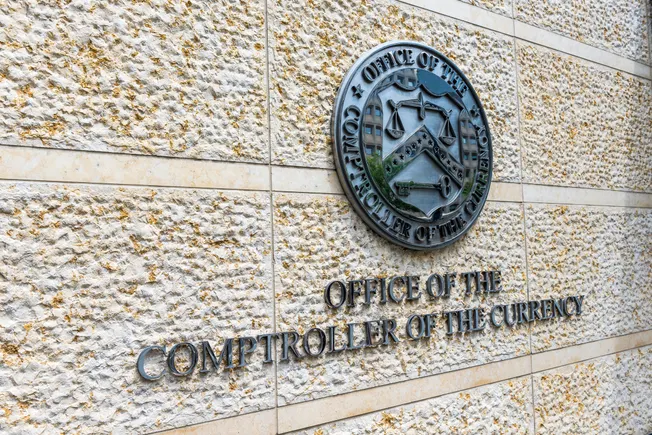
Online lending platform Avant applied for a de novo bank charter from the Office of the Comptroller of the Currency on Friday. The Chicago-based fintech, founded in 2013, provides credit cards and unsecured loans to middle-income Americans. CEO Al Goldstein said a charter would reduce Avant's cost of funds and allow it to operate under one regulatory framework, improving access to its products nationwide. Avant uses its proprietary machine learning tool CreditOS to assess creditworthiness. The application joins 42 other OCC de novo charter filings since January 2025, with 27 approved, two denied, and one returned. Michele Alt of Klaros Group, which advised Avant, called the filing an important milestone in expanding credit access.
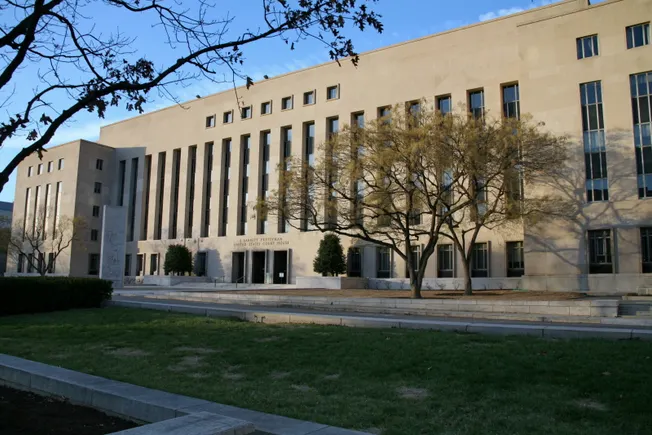
The Justice Department on Friday urged the D.C. Circuit Court of Appeals to reverse a district court order reinstating two fired National Credit Union Administration board members, Todd Harper and Tanya Otsuka. The DOJ argued that the NCUA is not the Federal Reserve and that Congress did not provide statutory removal restrictions for the NCUA, so the President may remove board members at will. Quoting James Madison, Alexander Hamilton, and the 1903 case Shurtleff v. U.S., the DOJ contended that the district court erred in reinstating Harper and Otsuka and that equitable relief should not finally determine removal. Harper and Otsuka had argued the NCUA was modeled after the Fed and should have similar independence.