


Latest news

Houston-based Third Coast Bancshares has agreed to acquire Oklahoma City-based Great Plains Bancshares and its subsidiary, Great Plains National Bank, for roughly $239.6 million in stock. The deal, expected to close in Q1 2027, will create a combined company with approximately $9 billion in assets and 43 branches across Oklahoma and Texas. Great Plains National Bank, which reported $1.9 billion in assets in June, operates 23 branches and entered the Dallas market in 2018. The merger will expand Third Coast into Oklahoma and deepen its presence in Dallas. Great Plains CEO Mark Russell will continue in a leadership role, and two Great Plains representatives will join the boards of Third Coast and Third Coast Bank. Pro forma ownership will be approximately 78% Third Coast shareholders and 22% Great Plains shareholders. The deal follows Third Coast's $123 million acquisition of Keystone Bancshares, which closed in February.
The Federal Reserve is restructuring its bank supervision function into five regions defined by state borders rather than reserve bank district boundaries, Michelle Bowman, the central bank's vice chair for supervision, said Tuesday. The move, informed by the Conference of State Bank Supervisors' regional structure, is designed to implement accountability and clear decision-making authority. The Fed also plans to improve the role of committees, as Bowman noted a complex web of committees has caused delays and obfuscated responsibility. Regional leaders will be held accountable for supervisory activity within their zones, while examiners remain at existing reserve bank locations. Critics, including Better Markets' Christopher Appel, are skeptical that the reorganization will lead to earlier risk identification and escalation, citing the need for cultural change. Bowman also said the Fed will consider broader structural reforms later this year.
Ally Financial CEO Michael Rhodes says strategy is about choices, and sometimes the best strategy is to do less, not more. Since taking the top post in April 2024, Rhodes has narrowed Ally's focus to three businesses: consumer banking, corporate finance and auto dealer financial services. The bank exited mortgages and sold its credit card program in early 2025, citing interest rate risk and a customer segment mismatch. Ally's full-year net income jumped about 28% from 2024 to 2025, to $852 million, and its core ROTCE was 11.8% in the second quarter. Rhodes acknowledges headwinds from the K-shaped economy, consumer stress and a recent Federal Reserve hike that pressures deposit costs, but he believes the focused model will continue to win.
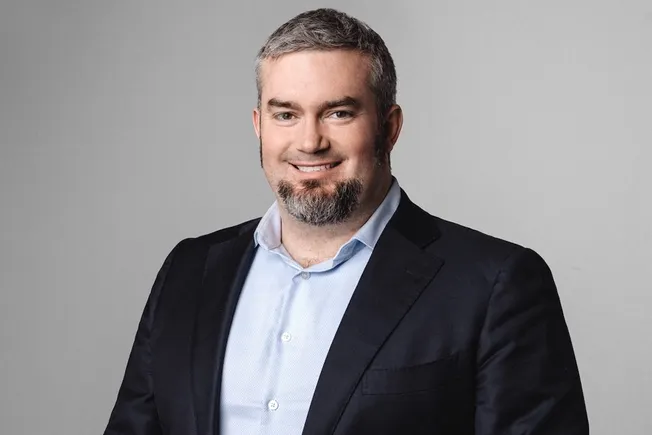
Anchorage Digital announced Tuesday it has acquired payout platform Routable; terms were not disclosed. The deal pairs Anchorage's regulated infrastructure for stablecoin issuance, custody and settlement with Routable's payout distribution layer, which connects clients' ERP systems to money-movement rails. Routable, backed early by OpenAI CEO Sam Altman, offers payee onboarding and verification, tax and compliance automation, and high-volume payouts via a developer-first API. Anchorage CEO Nathan McCauley said the company anticipated demand from Big Tech and Fortune 500 firms, while Routable CEO Omri Mor said clients gain a regulated bridge into digital assets. Routable will be branded 'Routable by Anchorage Digital,' with native stablecoin and tokenized deposit settlement embedded. Anchorage, which gained a national trust charter from the OCC in 2021 and completed a three-year consent order, sees stablecoins becoming core financial plumbing. Integrated offerings are planned over coming quarters.
Modern Treasury, a San Francisco-based payments infrastructure firm, and Rain, a New York City-based stablecoin infrastructure platform, applied on Monday for national trust charters from the Office of the Comptroller of the Currency. If approved, the charters would allow both firms to offer asset custody and related services, though neither would accept deposits or make loans. Modern Treasury plans a unified custody solution for fiat and digital assets, while Rain intends to issue stablecoins under the GENIUS Act and hold reserves for other issuers. These are the first trust charter applications since the Independent Community Bankers of America sued the OCC over its approval of such charters for cryptocurrency firms. Rain's proposed CEO is Brandon Soto, former CFO of Coastal Financial Corp. and Square Financial Services; Modern Treasury has not yet named its proposed bank CEO.

Banking conferences in 2027 will offer leaders a chance to gauge the industry's direction amid anticipated changes such as increased M&A and tailored regulation, while areas like cryptocurrency frameworks remain uncertain. Events like Acquire or Be Acquired, ABA Conference for Community Bankers, Fintech Meetup, ICBA Live, ABA Washington Summit, CBA Live, The Financial Brand Forum, National Credit Union CEO Roundtable, and ABA Risk and Compliance Conference provide opportunities to connect with peers, explore emerging technologies like AI, and navigate evolving compliance expectations.

A new report from Evident reveals that banks are accelerating their AI adoption while prioritizing governance and responsible AI. Nearly all 50 surveyed banks have responsible AI principles, up from 16 in 2023, and more than two-thirds have detailed controls. Banks advanced their AI use three times faster last year than the previous three, citing over 1,100 use cases since 2021. JPMorgan Chase leads Evident's maturity index, followed by Capital One and Royal Bank of Canada. AI governance talent grew 33% year over year, and 12 banks report ROI on AI projects, up from eight last year. The report highlights that banks are embedding AI deeper into workflows and focusing on risk mitigation, with over half of IT executives expecting AI agents fully embedded in risk, compliance, and audit functions.
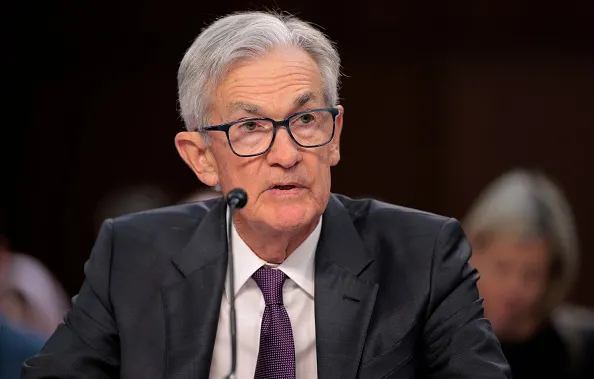
The Department of Justice has confirmed it will not reopen its criminal probe into former Federal Reserve Chair Jerome Powell regarding the Fed's multi-billion-dollar renovation. Attorney General Todd Blanche told Bloomberg that while the inspector general found mismanagement, there was no criminal conduct. The investigation was opened in January but dropped in April after a federal judge criticized the subpoenas as harassment. President Trump demanded Powell's resignation, while Fed Chair Kevin Warsh outlined plans for independent auditing and improved oversight.
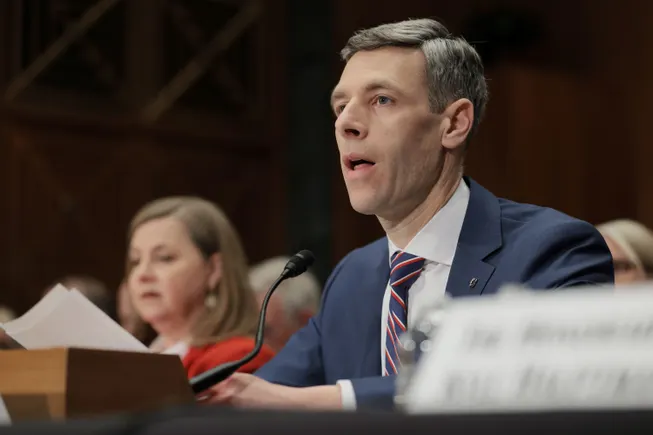
The Independent Community Bankers of America filed a lawsuit against the Office of the Comptroller of the Currency and Comptroller Jonathan Gould in federal court, alleging the agency exceeded its statutory authority by approving national trust bank charters, particularly for cryptocurrency companies. The suit asks the court to invalidate an OCC rule and an interpretive letter underpinning the approvals and to rescind the charter granted to Protego Holdings. ICBA argues these charters allow crypto firms to enter banking with lighter regulation, disadvantaging community banks. The OCC declined to comment. The lawsuit highlights tensions over the OCC's approach to crypto under the Trump administration.

Fiserv had planned to launch its FIUSD stablecoin by the end of 2025, but now says timing is uncertain. The payments processor has instead launched a digital-asset platform, initially hosting Bank of North Dakota's Roughrider stablecoin. Sunil Sachdev, head of embedded finance, explains the pivot: Fiserv moved away from partners Paxos and Circle to build a proprietary coin, influenced by the Roughrider project and the acquisition of StoneCastle. The company remains committed to FIUSD, citing its vast network of over 300 million bank accounts and 5-6 million merchants as key advantages. Other factors include a CEO transition and pressure from activist shareholder Jana Partners. Fiserv is also part of the Open USD stablecoin effort and is working with Fireblocks and Solana for its platform.