


Latest news

ScribeUp, a recurring bill management service for financial institutions, closed a $13 million Series A round led by Curql Collective, with Mucker Capital and Service Ventures participating. The funding includes $10 million in equity and a $3 million venture debt facility. ScribeUp provides infrastructure for the recurring economy, enabling over 60 financial institutions to let customers identify, manage, and cancel recurring payments within their banking apps. Using agentic AI, it can track some 200,000 unique subscription billers and proactively alert users to upcoming bills that may cause overdrafts. The company was founded in 2020 by Jordan Mackler and Yohei Oka, inspired by Oka's experience of forgetting subscriptions and incurring $350 in fees. The new funding will support hiring, technology, and go-to-market strategy.

AI is moving from pilots into core financial operations such as fraud detection, trading, and underwriting, forcing institutions to reconsider where AI workloads should run. Cloud-only strategies face new challenges around latency, power, cooling, governance, and data sovereignty. Many organizations are adopting a deliberate infrastructure strategy that evaluates cloud, colocation, modernized data centers, and hybrid models based on business priorities, workload requirements, and risk tolerance. Schneider Electric research highlights factors including data sovereignty, latency, time-to-market, scalability, staffing expertise, cash flow preferences, and total cost of ownership. Success will depend on aligning infrastructure decisions with business outcomes while preserving resiliency, security, and operational control.

Financial services AI is moving from back office to front lines, with 32% to 39% of work in capital markets, insurance, and banking poised for full automation. But legacy networks cannot handle the massive, bursty traffic and strict latency requirements of AI workloads. HPE's AI-native, self-driving routing solutions offer uncompromising performance for mixed workloads, experience-first Agentic AIOps, autonomous zero-trust security, and radical OpEx and sustainability gains, enabling financial institutions to lead in the AI era.

C&R Software draws a parallel between banks' fragmented digital communications adoption in the early 2010s and current AI procurement, cautioning that point solutions lead to agent sprawl, disconnected systems and technical debt. Citing an MIT study that 95% of organizations see no measurable return on generative AI investments, the article argues banks should build AI-native capability—shared decisioning engines, data models and governance layers—rather than bolting on narrow tools. It highlights collections as a proving ground and notes that analysts recommend defining domains of authority, deference protocols and resolution layers for AI agents. C&R Software positions its Debt Manager solution as AI native.

Banks increasingly rely on interconnected systems like building controllers, surveillance cameras, and vendor-managed appliances, creating ownership gaps that complicate cybersecurity. A vulnerability in a branch controller may be known but not resolvable because security, facilities, IT, and external contractors each own only part of the problem. Regulations like NYDFS 23 NYCRR Part 500 require asset inventory policies that address ownership, location, and support expiration, highlighting the need to connect asset visibility with accountability. Continuous, intelligence-driven assessment and passive discovery can identify specialized equipment and provide context for prioritization. However, findings must reach the teams responsible for remediation. The combination of Armis Centrix™ and ServiceNow workflows helps route findings, coordinate remediation, and maintain records of decisions. A case study shows a global financial services organization discovered three to four times as many assets as its CMDB reflected, improving vulnerability prioritization. Closing the gap between knowing and doing requires connecting exposures to accountable teams, enabling defensible risk-reduction decisions.
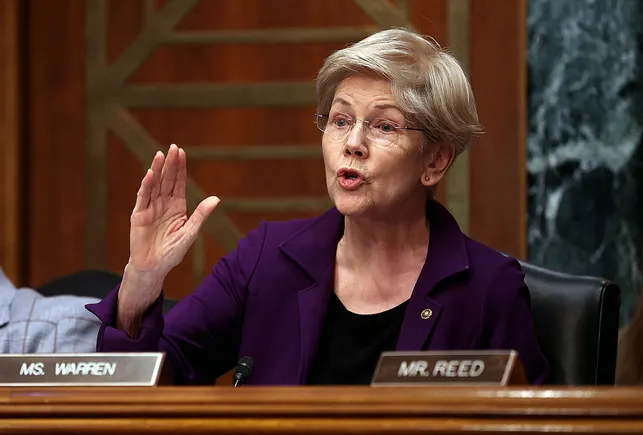
Sen. Elizabeth Warren, D-MA, and Rep. Robert Garcia, D-CA, introduced a bill Thursday that would require federal financial regulators to publicly disclose supervisory records, including internal communications, concerning Jeffrey Epstein and his associates. The legislation would also compel agencies like the Federal Reserve, OCC, FDIC, and SEC to investigate Epstein-connected banks and executives, with possible industry bans, fines, or Justice Department referrals. Warren expressed dissatisfaction with regulators' responses to her inquiries, citing letters from Fed Vice Chair Michelle Bowman and Comptroller Jonathan Gould that declined to confirm specific investigations. The bill, which has cross-party support from Rep. Thomas Massie, R-KY, is unlikely to pass this year but could gain traction if Democrats win majorities in November. JPMorgan Chase, Bank of America, and Deutsche Bank have paid over $400 million combined to settle victim lawsuits, but only Deutsche Bank has paid an Epstein-related penalty to a U.S. regulator.

SEB and its New York branch will pay $33 million to resolve a NYDFS investigation into its AML program, which stemmed from the Panama Papers leak. The regulator found deficiencies in customer due diligence, risk assessment, and transaction monitoring in the Baltics between 2015 and 2019. SEB is the fourth bank fined by NYDFS in connection with the scandal. The bank said the penalty will have limited financial impact and concludes historic AML issues with U.S. authorities.

Truist announced that Dontá Wilson, chief consumer and small business banking officer, will leave the bank effective Dec. 31. Shimna Sameer, who joined Truist in July to lead wealth management, will succeed Wilson. Jeff Warner, a 25-year PNC veteran, joins as chief small-business banking officer. D. Steve Boland was named vice chair. All report to CEO Mike Lyons, who is reshaping the leadership team. Truist also agreed to sell $7.7 billion of LightStream loans to Carlyle for estimated net proceeds of $7.2 billion, as part of a strategic review.
U.S. Bank CEO Gunjan Kedia said Thursday that growing the small-business segment will be a top priority in 2027, as the lender aims to replicate the playbook it used to grow consumer deposits. The bank's Smartly product suite, which connects consumer banking and credit cards, has helped improve its deposit base. Third-quarter net interest income rose about 6% to $4.5 billion, and net interest margin was 2.84%, up 9 basis points year over year. The savings offering within Smartly has amassed around $55 billion in deposits since its 2024 launch. In September, the bank launched two business credit cards linked to its spend management platform. U.S. Bank serves about 2 million small businesses; average deposits for the segment rose 2% year over year to $45 billion, average loans jumped 11% to $18 billion, and the segment generated $223 million in fee income, a 9% increase. Small-business banking represents about 10% of the bank's revenue. The bank is adding business bankers in Florida, Georgia, Dallas and Phoenix, and onboarded the Amazon small-business credit card co-brand partnership in Q3. U.S. Bank reported $2.2 billion in third-quarter net income on a 9% rise in revenue to about $8 billion.

Apple Bank CEO Steve Bush says the $20 billion-asset New York lender is staying true to its middle-class roots while spending about $10 million on marketing to reach younger customers. He explains the challenge of breaking through in a digital world, the role of big-bank missteps, branch expansion in New Jersey and Florida, and the OCC's conditional approval of its national charter.