


Credit Unions
Fired NCUA Board Members Sue Trump Over Unlawful Removal
Two former National Credit Union Administration (NCUA) board members, Todd Harper and Tanya Otsuka, have sued President Donald Trump and other government officials over their recent firings. The lawsuit, filed Monday, claims the removals were 'patently unlawful' and violate the Federal Credit Union Act, which requires a three-member board with no more than two from the same political party. The firings leave only Chair Kyle Hauptman on the board, preventing formal meetings or new rules due to lack of quorum. Harper and Otsuka argue the move undermines the NCUA's independence and could lead to consolidated regulation of credit unions and banks. The NCUA insures deposits for over 4,000 credit unions, safeguarding $2 trillion in assets for 142 million Americans. Senators Elizabeth Warren and Maxine Waters have also requested analysis from the NCUA Inspector General on how a one-member board can operate. The firings are part of a broader pattern of Trump removing Biden-era appointees at other independent agencies.
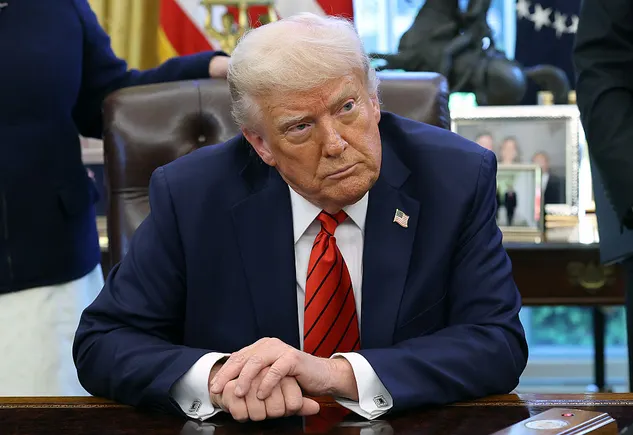
Two former National Credit Union Administration board members fired by President Donald Trump this month are suing him and a handful of other government officials, court documents show.
Todd Harper and Tanya Otsuka, two Democratic board members who until recently had served at the NCUA, sued the president Monday for their “patently unlawful removal[s].”
“During the Board’s nearly fifty years of existence, the President has never removed a Member whose term had not yet expired,” wrote Vincent Levy, a Holwell Shuster & Goldberg partner who is representing both plaintiffs. “President Trump’s unprecedented removal of Mr. Harper and Ms. Otsuka violates Congress’s mandate and has left the Board without a quorum.”
At least two members must be present on the board for the NCUA to have formal meetings or make new rules. According to the Federal Credit Union Act, the NCUA must be led by three board members, no more than two of whom should align to one political party.
“This structure promotes continuity, expertise, and independence, and helps insulate credit-union oversight from the shifting priorities of electoral politics,” Levy wrote.
Harper and Otsuka’s departures leave only NCUA Chair Kyle Hauptman on the board.
“Credit union members need a strong, independent watchdog,” Harper said in an emailed statement to Banking Dive. “That’s why we’re seeking relief to restore the Board’s lawful composition and preserve the independence Congress mandated.”
“Our failure to take these actions could pave the way to the consolidated regulation of credit unions and banks and lead to the demise of our nation’s vibrant credit union movement focused on its mission of meeting the credit and savings needs of members, especially those of modest means,” he wrote.
The NCUA insures the deposits of the nation’s more than 4,000 credit unions, safeguarding $2 trillion in assets for 142 million Americans.
Otsuka, for her part, said in a separate emailed statement: “Weakening financial watchdogs like the NCUA puts people’s money at risk and makes it harder and more expensive to pay your bills, start a new business, or buy a home.”
The firings “undermine the NCUA’s independence and its ability to protect our financial system,” she said, and have “implications for other independent financial regulators like the FDIC and the Federal Reserve.”
A spokesperson for the NCUA did not immediately return a request for comment.
Sen. Elizabeth Warren, D-MA, and Rep. Maxine Waters, D-CA, wrote to NCUA Inspector General James Hagen on Tuesday asking for, among other things, analysis on how a one-member NCUA board can conduct its operations.
Harper and Otsuka’s firings align with other moves Trump has made to fire Biden-era appointees at the Federal Trade Commission, Equal Employment Opportunity Commission, National Labor Relations Board and the Merit Systems Protection Board.
The Supreme Court weighed in on a case addressing NLRB and MSPB firings earlier this month, staying a lower court’s reinstatement of the agencies’ board members, effectively removing them from their federal positions again.
Otsuka was appointed to the NCUA in 2023 by then-President Joe Biden and was set to serve until Aug. 2, 2029. Harper was originally appointed by Trump but was named chair by Biden in 2021.
In a statement emailed to Banking Dive, Levy wrote that Monday’s lawsuit “seeks to vindicate Congress’s intent” and to “preserve the integrity of the financial markets.”
Hauptman, NCUA Executive Director Larry Fazio, Treasury Secretary Scott Bessent and Deputy Assistant to the President Trent Morse were named in the lawsuit.