


Retail
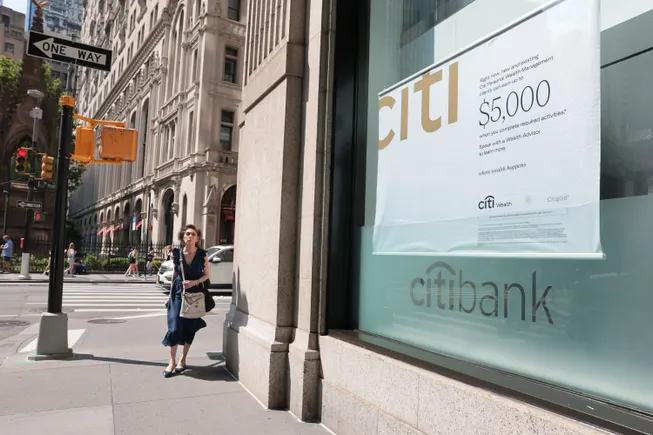
Citi is introducing higher savings rates for its tiered clients—Citigold Private Client, Citigold, and Citi Priority—to incentivize bringing more assets to the bank. The move aims to deepen relationships and counter the industry trend of customers moving money for promotions. Kate Luft, Citi's head of retail banking, said the 'always-on' savings boost is designed to stop money in motion and reward clients for consolidating their banking, lending, and investing with Citi. The bank seeks to capture a share of the $3 trillion in client assets not held at Citi, with about $2 trillion in the mass-market space. Citi reported $38 billion in net new investment assets in Q3 and a 16% revenue increase in its wealth unit, and plans a larger marketing investment next year to highlight its retail enhancements.
Barclays is cutting roughly 5,000 full-time employees, or 5% of its workforce, this year, with heavy impact expected in support functions such as developers as artificial intelligence boosts productivity, CFO Anna Cross said Thursday. The bank reduced its workforce by about 1,000 in the first half, so the remaining 4,000 cuts are expected by December. CEO C.S. Venkatakrishnan said the bank intends to employ AI at scale but called AI 'the icing on the cake, not the cake.' The announcement came as Barclays reported third-quarter earnings, including a 19% year-over-year drop in fixed income and currency trading revenue, though overall profit rose 12% to $3.1 billion and equities trading revenue jumped 47%.
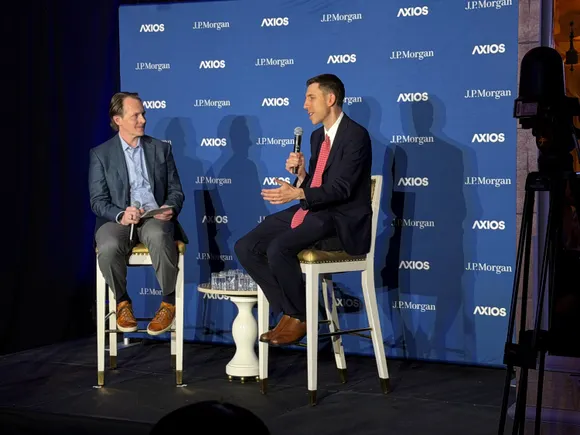
At an Axios event in Las Vegas, FDIC Chair Travis Hill said AI agents moving deposits on behalf of customers is a major concern for banks and regulators, with questions about how many depositors will delegate decision-making and the impact on the deposit landscape. He noted that big banks like Citi, Bank of America, and JPMorgan Chase have blocked external AI agents, and that accountability questions remain. Hill also said revised model risk management guidance doesn't work well for agentic and generative AI, and the FDIC is considering seeking public input. The agency is using AI for efficiency in supervision and failed bank resolutions but wants to move faster.
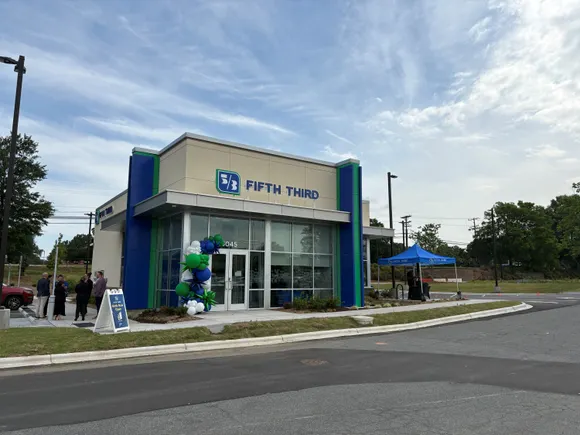
Fifth Third CEO Tim Spence downplayed the risk from AI agent Muse, stating that online-only lenders are most vulnerable to AI-driven cash optimization. He emphasized that Fifth Third's physical distribution and value-added services provide leverage, and the bank plans to incorporate valuable Muse features into its apps. CFO Bryan Preston said concerns are likely overblown, noting the bank's median household checking balance is $3,000 and commercial deposits are largely operational. Fifth Third does not currently allow AI agents to initiate transactions. The discussion follows Meta's launch of Muse, which has reignited concerns about agentic AI cash sorting, with Citi, Bank of America, and JPMorgan blocking external AI agents. JPMorgan CEO Jamie Dimon warned of liability transfer risks. Fifth Third reported average core deposits grew 3% sequentially to $236 billion, with deposit costs rising.
During Fifth Third's Q3 earnings call, CEO Tim Spence and CFO Bryan Preston discussed the threat of AI-driven cash optimization, particularly following Meta's launch of AI assistant Muse. Spence argued that banks with physical distribution and added value are less at risk than online-only lenders, while Preston said concerns are 'likely overblown' given Fifth Third's $3,000 median checking balance and operational commercial deposits. The bank doesn't currently allow AI agents to initiate transactions, and Preston emphasized the need for accountability questions to be settled first. Spence highlighted the opportunity for incumbents to integrate valuable services into their apps, leveraging bank-grade security and data separation. Fifth Third reported 3% sequential growth in average core deposits to $236 billion, with deposit costs rising slightly.

C&R Software draws a parallel between banks' fragmented digital communications adoption in the early 2010s and current AI procurement, cautioning that point solutions lead to agent sprawl, disconnected systems and technical debt. Citing an MIT study that 95% of organizations see no measurable return on generative AI investments, the article argues banks should build AI-native capability—shared decisioning engines, data models and governance layers—rather than bolting on narrow tools. It highlights collections as a proving ground and notes that analysts recommend defining domains of authority, deference protocols and resolution layers for AI agents. C&R Software positions its Debt Manager solution as AI native.
Truist announced that Dontá Wilson, chief consumer and small business banking officer, will leave the bank effective Dec. 31. Shimna Sameer, who joined Truist in July to lead wealth management, will succeed Wilson. Jeff Warner, a 25-year PNC veteran, joins as chief small-business banking officer. D. Steve Boland was named vice chair. All report to CEO Mike Lyons, who is reshaping the leadership team. Truist also agreed to sell $7.7 billion of LightStream loans to Carlyle for estimated net proceeds of $7.2 billion, as part of a strategic review.
U.S. Bank CEO Gunjan Kedia said Thursday that growing the small-business segment will be a top priority in 2027, as the lender aims to replicate the playbook it used to grow consumer deposits. The bank's Smartly product suite, which connects consumer banking and credit cards, has helped improve its deposit base. Third-quarter net interest income rose about 6% to $4.5 billion, and net interest margin was 2.84%, up 9 basis points year over year. The savings offering within Smartly has amassed around $55 billion in deposits since its 2024 launch. In September, the bank launched two business credit cards linked to its spend management platform. U.S. Bank serves about 2 million small businesses; average deposits for the segment rose 2% year over year to $45 billion, average loans jumped 11% to $18 billion, and the segment generated $223 million in fee income, a 9% increase. Small-business banking represents about 10% of the bank's revenue. The bank is adding business bankers in Florida, Georgia, Dallas and Phoenix, and onboarded the Amazon small-business credit card co-brand partnership in Q3. U.S. Bank reported $2.2 billion in third-quarter net income on a 9% rise in revenue to about $8 billion.

Apple Bank CEO Steve Bush says the $20 billion-asset New York lender is staying true to its middle-class roots while spending about $10 million on marketing to reach younger customers. He explains the challenge of breaking through in a digital world, the role of big-bank missteps, branch expansion in New Jersey and Florida, and the OCC's conditional approval of its national charter.
JPMorgan Chase livestreamed a fraud-focused panel to about 700 branches on Wednesday. The panel included Pat Opet, the bank's information security chief; Michelle Singletary, a Washington Post columnist; and Brett Leatherman, assistant director of the FBI's cyber division. They discussed how AI-enabled impersonation and money movement scams can be spotted and how individuals can strengthen their cyber defenses. Darius Kingsley, Chase's head of consumer fraud and scam prevention, moderated the panel from the bank's mid-Atlantic regional headquarters in Washington, D.C. Kingsley said scams are becoming more sophisticated with open-source AI models, and that younger people are increasingly falling victim. Impostor scams cost reported victims $3.5 billion in 2025, according to the FTC, while Gallup estimated the figure at $68 billion. Kingsley emphasized that fraud starts upstream and requires cross-industry collaboration.