


Commercial

At Money20/20, Wells Fargo executive Faraz Shafiq detailed the bank's strategy to fundamentally transform operations with AI, centered on four core components: a hub-and-spoke operating model, prioritizing highest-impact use cases, moving fast with discipline, and upskilling its 197,000 employees. Shafiq highlighted tangible results, including a 40% boost in product sales rates from banker intelligence capabilities and a custom small language model for fraud detection, as the bank aims to differentiate through proprietary data and insights.

Truist is expanding its merchant services capabilities, introducing a faster onboarding experience and new business insights, and offering more tools through Fiserv's Clover POS system and Early Warning Services' Paze digital wallet. Chris Ward, head of enterprise payments, said the enhancements are designed to make the offering more relevant to clients' daily operations and integrate multiple capabilities rather than point solutions. The move supports Truist's strategy to become a more integrated, trusted adviser and to grow payments across consumer and wholesale segments. Truist reported card and treasury management fees rose 2% year over year to $347 million in the third quarter.
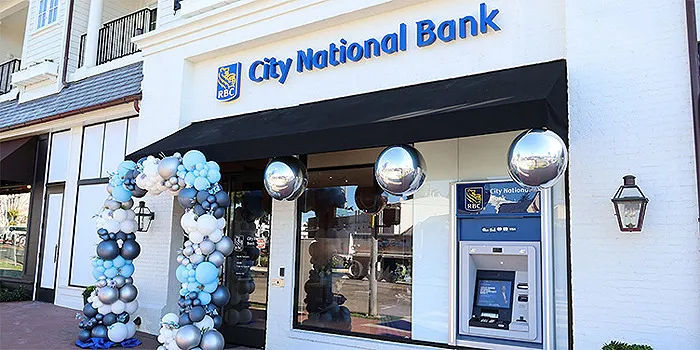
City National is leveraging its RBC ownership to convey trust and stability as it grows its private wealth management business. The bank has rebranded City National Rochdale to RBC Rochdale and changed 'private banking' to 'private bank' to emphasize a holistic advisory approach. Under Brandon Williams, the private bank has hired about 85 people and promoted 80 in the past 10 months, bringing in talent from competitors. City National, with $100 billion in assets, aims to deepen client relationships and may expand into markets like Charlotte and Nashville, capitalizing on the great wealth transfer.

Fragmented payments prevented Kin Insurance from scaling and forced reliance on multiple third-party platforms that didn't share information. By selecting the right payments partner, Kin Insurance successfully unified payments and built lasting value. Listen to their story in 'The connective tissue of insurance' on Spreaker.

U.S. Bank's chief risk officer Jodi Richard is departing to become chief risk officer at American Express and its national bank, effective Jan. 25, 2027. Troy Remington, U.S. Bank's chief credit officer, will serve as interim risk chief. Richard's move comes as Amex faces a $350 million civil money penalty and enforcement actions from the Federal Reserve and OCC over anti-money laundering compliance failures. Amex CEO Stephen Squeri cited Richard's regulatory and business experience. Current Amex risk chief Doug Tabish will become president of enterprise shared services in February after Denise Pickett retires.

Valley National Bank's $340 million acquisition of Bluevine, announced in September, aims to merge the fintech's digital capabilities with the bank's relationship banking model. Bluevine CEO Eyal Lifshitz and Valley COO Russ Barrett explain that the deal, expected to close in early 2027, will create a unified small-business banking segment led by Lifshitz. The integration brings $2.1 billion in deposits, 175,000 active small-business clients, and roughly 180 R&D employees to Valley, growing its small-business customer base 20-fold. Both executives emphasize shared cultural fit and the potential to accelerate innovation by combining technology with personalized advice.

Bluefield, Virginia-based First Community Bankshares announced Wednesday it will acquire Main Street Financial Services Corp. in a roughly $243 million deal, set to close in Q2 2027. The transaction adds $1.6 billion in assets, $1.4 billion in deposits, $1.3 billion in loans, and 21 branches—17 in Ohio, a new market for First Community. Wooster, Ohio-based Main Street reported a 43% year-over-year profit jump in Q3. Main Street CEO Mark Witmer will become president of First Community's Ohio region, and one Main Street director will join First Community's boards. The combined company is expected to report about $5.2 billion in assets before adjustments.
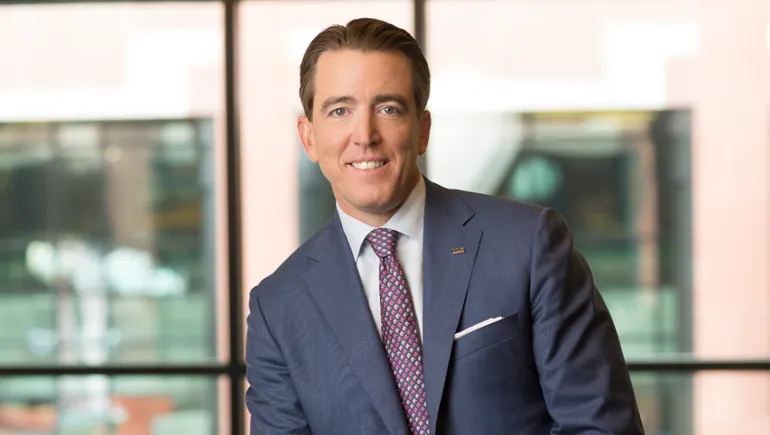
Kansas City, Missouri-based UMB Financial Corp. has agreed to acquire Placerville, California-based El Dorado Savings Bank in a cash-and-stock deal valued at $506 million. The transaction will add approximately $2.4 billion in assets, $2.1 billion in deposits, $500 million in loans, and 35 branches across California and Nevada, growing UMB's branch network to 227 locations in 15 states. The deal, UMB's first since its $2 billion purchase of Heartland Financial was approved in January 2025, is expected to close in the first quarter of 2027. El Dorado CEO David O. Cook will become vice chair of UMB Bank California. UMB CEO Mariner Kemper said the acquisition significantly expands the bank's retail footprint in California and enters Nevada, with potential upside from wealth migration to Nevada. The deal is expected to be modestly accretive to 2027 earnings.

Tupelo, Mississippi-based Renasant Corp. has agreed to acquire Paris, Tennessee-based Commercial Bank & Trust Co. in a $142 million deal expected to close in the first quarter of 2027. The acquisition will add nine branches in western Tennessee, including two in Memphis, and provide access to a trust and wealth management business with $1.2 billion in assets under management. Commercial brings a common equity tier 1 ratio of 19.6%. The deal will push Renasant's total assets to $28.6 billion, with $20.4 billion in loans and $22.6 billion in deposits. Renasant's Tennessee footprint will expand to 28 locations and about $2.6 billion in deposits, ranking in the top 10 in the state among banks with less than $100 billion in assets. Commercial CEO Mott Ford will join Renasant in a market executive role after closing. Commercial shareholders will receive 0.8798 shares of Renasant common stock per share, based on Renasant's 10-day average closing price of $40.29. The deal marks Renasant's first acquisition since buying The First Bancshares for about $1.2 billion in 2025.
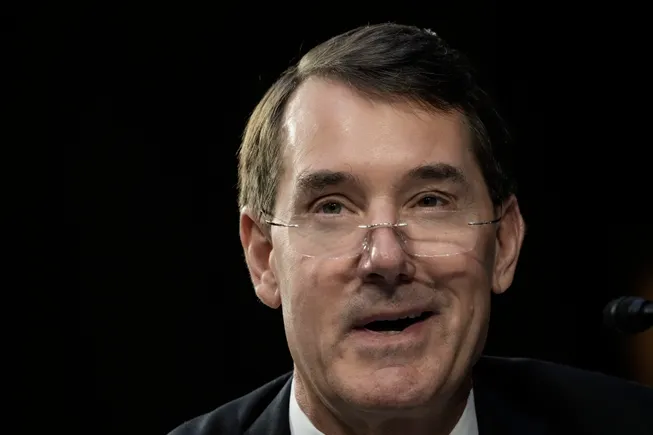
PNC CEO Bill Demchak predicts that banks lacking their own compute infrastructure will fall behind in AI, leading to increased M&A, particularly among small banks. He emphasizes PNC's focus on building its own AI capabilities, which will cost hundreds of millions to save billions annually, and warns that a large acquisition could delay AI progress. Demchak also discusses the human impact, including retraining and reduced offshore contractors, and PNC's approach to building versus buying AI technology.